

Women Entrepreneurship in Rural India: Challenges and Opportunities
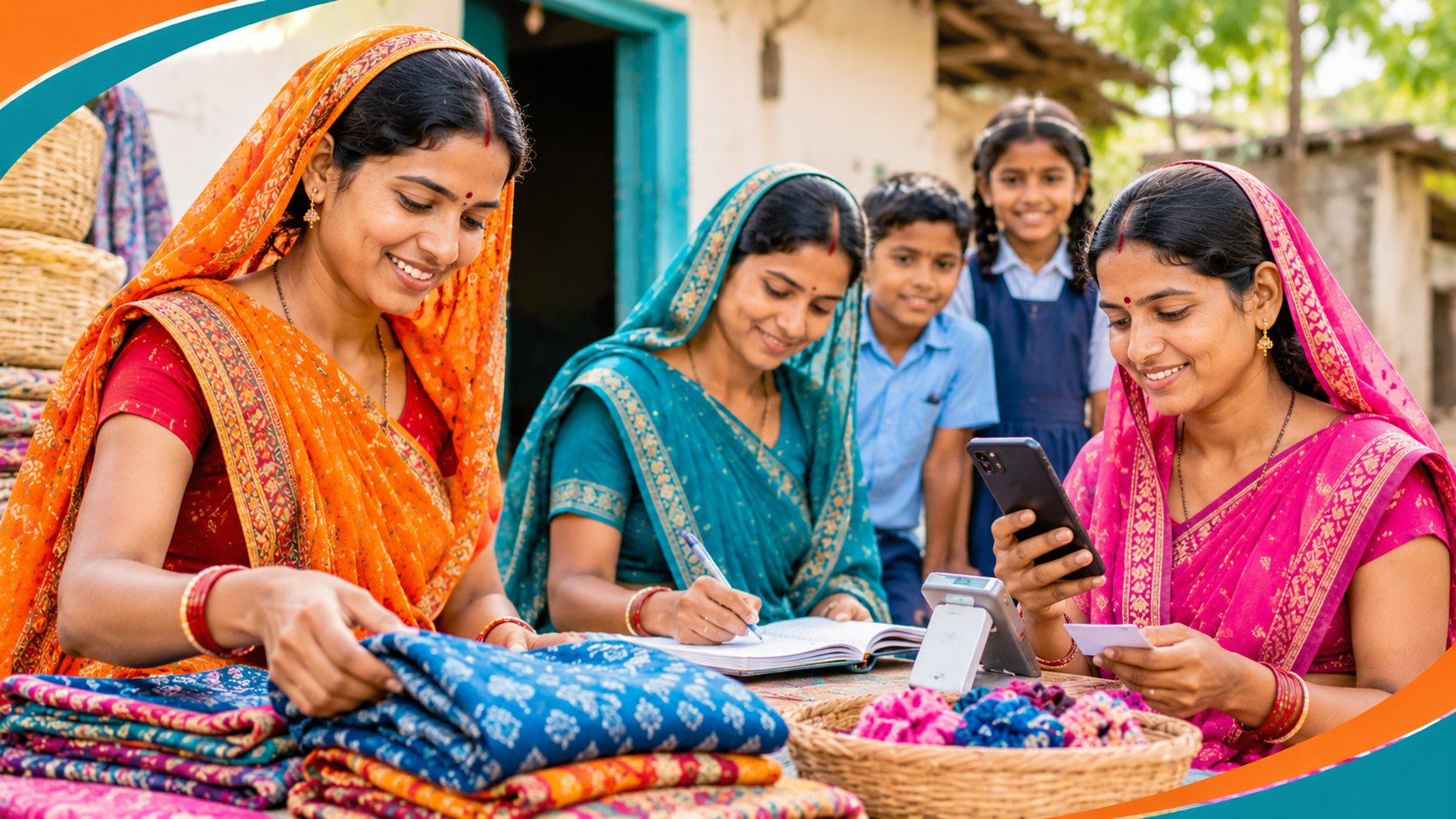
Women entrepreneurship is becoming an important driver of economic growth, social development, and financial independence in India. Across rural communities, women are increasingly exploring opportunities to start small businesses, develop local products, manage enterprises, and contribute to household income.
However, starting and managing a business in rural areas is not always easy. Limited financial resources, lack of business knowledge, restricted market access, social barriers, and limited digital literacy can prevent many women from turning their ideas into successful enterprises.
Women entrepreneurship in rural India is about creating opportunities that help women overcome these barriers and become financially independent. With access to education, skill development, financial support, mentorship, and market connections, rural women can build sustainable businesses and contribute to their communities.
Self-Help Groups (SHGs), NGOs, government initiatives, and community-based organisations play an important role in supporting this transformation.
At Manav Vikas Sanstha (MVS India), we believe that empowering women through entrepreneurship, vocational training, and livelihood opportunities is essential for creating sustainable economic and social change.
What Is Women Entrepreneurship in Rural India?
Women entrepreneurship in rural India refers to businesses and income-generating activities established, owned, or managed by women living in rural communities.
These enterprises may operate individually or collectively through Self-Help Groups, cooperatives, and community-based organisations.
Rural women entrepreneurs often use locally available resources, traditional knowledge, practical skills, and community networks to develop businesses.
Some common examples include:
- Tailoring and garment production.
- Handicrafts and traditional embroidery.
- Dairy farming and livestock businesses.
- Food processing and homemade products.
- Organic farming and agricultural activities.
- Small retail shops and local services.
- Beauty and wellness services.
- Digital services and online businesses.
These businesses provide opportunities for women to earn income, develop professional skills, support their families, and participate more actively in local economic activities.
Why Is Women Entrepreneurship Important in Rural India?
Women entrepreneurship has the potential to transform rural communities by creating employment, improving household income, and strengthening local economies.
Here are some important benefits of promoting entrepreneurship among rural women.
1. Promotes Financial Independence
Financial independence is one of the most important outcomes of women entrepreneurship.
When women start their own businesses, they gain opportunities to earn income, manage finances, save money, and make independent financial decisions.
Business ownership also helps women develop confidence in handling financial responsibilities.
With proper financial planning and access to credit, rural women can gradually expand their businesses and improve their economic security.
2. Creates Employment Opportunities
Women-led businesses can generate employment opportunities within rural communities.
For example, a tailoring unit may employ other women, while a food-processing enterprise may create opportunities for packaging, production, distribution, and sales.
These activities help strengthen the local economy and encourage community-based employment.
3. Reduces Economic Dependence
Entrepreneurship gives women an opportunity to develop their own sources of income rather than depending entirely on other family members.
This can improve their participation in household decisions related to education, healthcare, savings, and future investments.
4. Encourages Innovation and Local Products
Rural communities have valuable traditional knowledge, agricultural resources, handicraft skills, and locally produced materials.
Women entrepreneurs can use these resources to create products that meet local and wider market demand.
Traditional food products, handmade textiles, handicrafts, and agricultural products can become successful business opportunities when supported by quality improvement and marketing.
5. Strengthens Rural Development
Women-led enterprises contribute to rural development by creating economic activities within villages.
They can encourage local production, reduce dependence on distant markets, create employment, and improve community participation.
When rural women become economically active, the benefits can extend to their families and the wider community.
Major Challenges Faced by Women Entrepreneurs in Rural India
Despite growing opportunities, many rural women continue to face challenges when starting or managing businesses.
Understanding these barriers is important for developing effective women entrepreneurship programmes.
1. Limited Access to Finance
Access to financial resources is one of the biggest challenges for rural women entrepreneurs.
Many women may have promising business ideas but lack the savings, collateral, credit history, or financial awareness needed to obtain business loans.
Without sufficient funding, it can become difficult to purchase equipment, raw materials, packaging materials, and other essential resources.
Possible solutions:
- Promote Self-Help Groups and collective savings.
- Improve awareness about formal banking services.
- Provide guidance on loan applications.
- Connect women with suitable financial institutions.
- Encourage financial literacy and business planning.
2. Lack of Business and Technical Skills
Having a business idea is not enough to establish a successful enterprise.
Women entrepreneurs also need practical knowledge of production, pricing, marketing, customer service, inventory management, and financial planning.
A lack of technical and managerial skills can affect product quality, business performance, and long-term growth.
Possible solutions:
Vocational training, entrepreneurship development programmes, practical workshops, and mentorship can help women acquire the skills needed to manage their businesses effectively.
3. Limited Market Access
Many rural women produce high-quality handmade products, traditional foods, textiles, and agricultural goods.
However, reaching customers beyond their immediate communities can be difficult.
Limited transportation, weak distribution networks, lack of branding, and dependence on intermediaries may reduce their earning potential.
Possible solutions:
- Connect women entrepreneurs with local markets.
- Develop product packaging and branding.
- Encourage participation in exhibitions and trade fairs.
- Promote online selling and digital marketing.
- Build partnerships with retailers and larger buyers.
4. Social and Cultural Barriers
In some rural communities, traditional expectations and gender stereotypes can restrict women’s ability to start and operate businesses.
Household responsibilities, limited mobility, and a lack of family support may affect their participation in economic activities.
Possible solutions:
Community awareness programmes, family engagement, women’s leadership development, and supportive local networks can help create a more enabling environment.
5. Limited Digital Literacy
Digital technology has become increasingly important for business development.
However, many rural women may have limited access to smartphones, computers, internet connectivity, digital payments, and online business platforms.
This can restrict their ability to promote products, communicate with customers, manage payments, and explore new markets.
Possible solutions:
Digital literacy programmes can teach women how to use smartphones, online banking, digital payments, social media, and e-commerce platforms for business purposes.
6. Lack of Mentorship and Business Guidance
First-time entrepreneurs may struggle with identifying profitable opportunities, preparing business plans, managing expenses, and understanding market demand.
Without proper guidance, small businesses may face difficulties in becoming sustainable.
Possible solutions:
NGOs, financial institutions, experienced entrepreneurs, and business development organisations can provide mentorship, technical guidance, and continuous support.
Best Business Opportunities for Rural Women in India
Rural India offers several opportunities for women who want to start small businesses or become self-employed.
The best business option depends on local resources, skills, available investment, customer demand, and market conditions.
Here are some promising business opportunities.
1. Tailoring and Garment Business
Tailoring is one of the practical self-employment opportunities for rural women.
Women can provide stitching, alterations, embroidery, school uniforms, and customised clothing services.
With appropriate training and equipment, a small tailoring unit can gradually expand into a larger garment business.
2. Food Processing and Homemade Products
Food processing offers opportunities to turn locally available agricultural products into marketable goods.
Examples include:
- Pickles and chutneys.
- Papad and traditional snacks.
- Spice powders.
- Homemade sweets.
- Processed fruits and vegetables.
- Packaged traditional food products.
Women can start small and gradually improve production, packaging, quality, and distribution.
3. Handicrafts and Embroidery
Traditional handicrafts and embroidery can become valuable sources of income for rural women.
Products such as handmade bags, decorative items, textiles, home furnishings, and embroidered garments can attract customers in local and wider markets.
Better product design, quality control, and branding can help these enterprises grow.
4. Dairy Farming and Livestock Management
Dairy farming and livestock-related activities are important livelihood opportunities in many rural communities.
Women can participate in milk production, animal care, poultry farming, and related agricultural businesses.
Proper training, veterinary support, financial planning, and market connections are important for making these activities sustainable.
5. Beauty and Wellness Services
Beauty and wellness services can provide self-employment opportunities for women in rural and semi-urban areas.
Training in basic beauty services, skincare, haircare, and professional hygiene can help women establish small service-based businesses.
6. Digital and Online Businesses
Digital technology has created new opportunities for rural women entrepreneurs.
Women with access to smartphones and digital skills can explore:
- Online product selling.
- Social media-based businesses.
- Digital marketing services.
- Online customer support.
- Digital payment services.
- Local product promotion.
Digital entrepreneurship can help women reach customers beyond their immediate geographical areas.
How Self-Help Groups Support Women Entrepreneurship
Self-Help Groups (SHGs) play an important role in encouraging entrepreneurship among rural women.
They provide a platform where women can work together, develop savings habits, access financial services, and explore collective business opportunities.
Some major ways SHGs support rural women entrepreneurs include:
Collective Savings and Financial Support
SHG members contribute regular savings to a common fund.
These savings can help members access internal loans and develop financial discipline.
Eligible groups may also establish bank linkages to access formal credit facilities.
Skill Development and Training
SHGs can connect women with vocational training and entrepreneurship development programmes.
Training in tailoring, food processing, handicrafts, digital literacy, and business management can help women develop income-generating skills.
Collective Business Opportunities
Women can work together to establish small production units, develop products, share resources, and manage business activities.
Collective enterprises can also help members distribute responsibilities and access larger opportunities.
Market Connections
SHGs can help women participate in local exhibitions, community markets, trade fairs, and other sales opportunities.
With appropriate support, women-led businesses can explore online marketplaces and wider distribution networks.
Government Schemes Supporting Women Entrepreneurs in Rural India
The Government of India has introduced several programmes to support women’s financial inclusion, entrepreneurship, and rural livelihood development.
Some important initiatives include:
1. Deendayal Antyodaya Yojana – National Rural Livelihoods Mission (DAY-NRLM)
DAY-NRLM aims to improve rural livelihoods by organising rural women into Self-Help Groups and supporting them through financial inclusion, capacity building, and sustainable livelihood opportunities.
It also promotes women-led enterprises and community-based institutions.
2. Start-up Village Entrepreneurship Programme (SVEP)
SVEP is a component of DAY-NRLM that supports rural entrepreneurs in establishing and developing small businesses, particularly in the non-farm sector.
It focuses on enterprise support, business guidance, and access to financial resources.
3. Pradhan Mantri MUDRA Yojana (PMMY)
The MUDRA scheme supports eligible micro-enterprises through loans provided by participating financial institutions.
Women entrepreneurs may explore this scheme for eligible business activities, subject to applicable lending requirements.
4. Stand-Up India
Stand-Up India was designed to facilitate bank loans for eligible women and SC/ST entrepreneurs setting up greenfield enterprises.
Applicants should check the current scheme status, eligibility, and available lending provisions before applying.
5. Lakhpati Didi Initiative
The Lakhpati Didi initiative focuses on supporting women associated with Self-Help Groups to develop sustainable livelihood activities and increase their annual household income.
It encourages skill development, entrepreneurship, financial inclusion, and multiple income-generating activities.
These programmes can create opportunities for rural women, but access depends on eligibility, implementation, financial institutions, and local availability.
Role of NGOs in Promoting Rural Women Entrepreneurship
NGOs play an important role in connecting rural women with training, financial resources, business opportunities, and community support.
They often work directly with local communities to understand the challenges faced by women and develop programmes that address their needs.
Important contributions of NGOs include:
- Organising women into Self-Help Groups.
- Promoting financial literacy and savings.
- Providing vocational and technical training.
- Supporting micro-enterprise development.
- Encouraging entrepreneurship and self-employment.
- Facilitating access to credit.
- Connecting women with markets and buyers.
- Promoting digital literacy.
- Developing leadership and decision-making skills.
- Creating awareness about women’s rights and opportunities.
NGOs can also collaborate with government departments, banks, CSR partners, and businesses to create stronger entrepreneurship ecosystems.
How MVS India Supports Women Entrepreneurship
At Manav Vikas Sanstha (MVS India), we believe that women empowerment should focus on creating sustainable opportunities rather than providing temporary assistance.
Our initiatives promote economic independence, practical skill development, entrepreneurship, and livelihood generation among women and communities.
Through our women empowerment programmes, we focus on building capabilities that help women become self-reliant and actively participate in economic development.
Project POWER: Promotion of Women Empowerment and Rights
Project POWER focuses on improving women’s economic independence through skill development, vocational training, access to financial resources, and community-based empowerment.
The initiative promotes Self-Help Groups, micro-enterprises, income-generating activities, and market linkages.
It also encourages women to explore opportunities that can help them develop sustainable livelihoods.
Project UDDAAN: Skill Development and Entrepreneurship
Project UDDAAN focuses on enhancing employability and promoting entrepreneurship among women and youth in rural and semi-urban communities.
Its skill development activities include areas such as apparel and tailoring, handicrafts, beauty and wellness, and other livelihood-oriented sectors.
Practical training helps participants develop capabilities that can support employment and self-employment opportunities.
Promoting Self-Help Groups and Financial Inclusion
MVS India supports the promotion of Self-Help Groups and access to credit through savings and financial linkages.
These mechanisms can help women access financial resources for productive and essential needs while reducing dependence on informal moneylenders.
Supporting Micro-Enterprises and Market Linkages
Business development requires more than financial assistance.
MVS India promotes micro-enterprises and market connections that can help women entrepreneurs reach broader markets and develop sustainable income streams.
By connecting skills with business opportunities, these initiatives work towards strengthening women’s economic participation.
Learn more about Project POWER – Women Empowerment and Rights.
How to Build a Sustainable Business as a Rural Woman Entrepreneur
Starting a business requires planning, patience, and continuous learning.
Here are some practical steps that can help rural women develop sustainable enterprises.
Step 1: Identify a Business Opportunity
Start by identifying products or services that are in demand within the local community.
Consider personal skills, available resources, local traditions, and customer requirements.
Step 2: Develop the Required Skills
Participate in vocational training, entrepreneurship workshops, and business development programmes.
Learning production techniques, pricing, marketing, and financial management can improve business performance.
Step 3: Prepare a Simple Business Plan
A business plan should include:
- Products or services offered.
- Initial investment requirements.
- Raw materials and equipment.
- Expected production costs.
- Selling prices.
- Target customers.
- Marketing and distribution plans.
Step 4: Explore Financial Support
Consider personal savings, SHG-based financial support, bank loans, and suitable government programmes.
Understand the loan terms, repayment responsibilities, and business risks before borrowing.
Step 5: Develop Branding and Marketing
Create an identity for your products or services.
Use suitable packaging, product photography, local promotions, social media, and customer recommendations to increase visibility.
Step 6: Build Customer Relationships
Listen to customer feedback, maintain product quality, deliver consistently, and develop long-term relationships with buyers.
Step 7: Monitor and Expand the Business
Maintain records of income, expenses, sales, and savings.
Review business performance regularly and expand gradually according to customer demand and financial capacity.
Women Entrepreneurship and Sustainable Rural Development
Women entrepreneurship contributes to several important Sustainable Development Goals (SDGs).
SDG 1 – No Poverty: Income-generating activities can help reduce household economic vulnerability.
SDG 5 – Gender Equality: Women-owned enterprises promote women’s economic participation and independent decision-making.
SDG 8 – Decent Work and Economic Growth: Entrepreneurship encourages employment, self-employment, and local economic development.
SDG 9 – Industry, Innovation and Infrastructure: Small enterprises encourage local innovation, production, and business development.
SDG 10 – Reduced Inequalities: Supporting women entrepreneurs can improve access to economic opportunities for disadvantaged communities.
Investing in rural women entrepreneurs can therefore contribute to more inclusive and sustainable economic development.
Conclusion: Empowering Rural Women Through Entrepreneurship
Women entrepreneurship in rural India offers significant opportunities to improve financial independence, generate employment, and strengthen local economies.
However, rural women entrepreneurs need more than business ideas. They require access to finance, vocational training, digital knowledge, mentorship, market linkages, and continuous institutional support.
Self-Help Groups, NGOs, government initiatives, and CSR partnerships can work together to create an environment where women can establish and grow sustainable businesses.
At MVS India, we believe that empowering women through skill development, entrepreneurship, and livelihood opportunities is essential for creating lasting social and economic change.
When rural women become entrepreneurs, they do more than build businesses. They create opportunities for their families, inspire other women, and contribute to stronger communities.
Support Women Entrepreneurship with MVS India
Join hands with MVS India to promote women’s skill development, financial independence, entrepreneurship, and sustainable livelihood opportunities.
Explore our women empowerment initiatives and connect with MVS India to support meaningful change.
Frequently Asked Questions (FAQs)
1. What is women entrepreneurship in rural India?
Women entrepreneurship in rural India refers to businesses and income-generating activities owned or managed by women in rural communities. These include tailoring, handicrafts, food processing, dairy farming, retail, and digital businesses.
2. What are the main challenges faced by rural women entrepreneurs?
Major challenges include limited access to finance, lack of business skills, limited market access, social restrictions, digital literacy barriers, and insufficient mentorship.
3. What are the best business ideas for rural women in India?
Some business opportunities include tailoring, food processing, handicrafts, embroidery, dairy farming, poultry, beauty services, small retail businesses, and online product selling.
4. How do Self-Help Groups support women entrepreneurs?
SHGs support women through collective savings, access to credit, financial awareness, vocational training, business collaboration, and market connections.
5. Which government schemes support women entrepreneurs in India?
Some relevant initiatives include DAY-NRLM, Start-up Village Entrepreneurship Programme, Pradhan Mantri MUDRA Yojana, Stand-Up India, and the Lakhpati Didi initiative. Eligibility and current availability should be checked before applying.
6. How can NGOs help rural women start businesses?
NGOs can support women through vocational training, entrepreneurship development, SHG promotion, financial literacy, business guidance, access to credit, and market linkages.
7. How does MVS India promote women entrepreneurship?
MVS India supports women through Project POWER and Project UDDAAN, focusing on skill development, vocational training, SHG promotion, micro-enterprises, financial resources, and livelihood opportunities.
8. Why is women entrepreneurship important for rural development?
Women entrepreneurship generates income, creates employment, strengthens local businesses, promotes gender equality, and supports sustainable economic development in rural communities.

All Categories
- Annual Reports (1)
- News (36)
- Projects (13)
Tags
+0123 (456) 7899
contact@example.com