

How Self-Help Groups Support Rural Women: Building Financial Independence and Empowerment
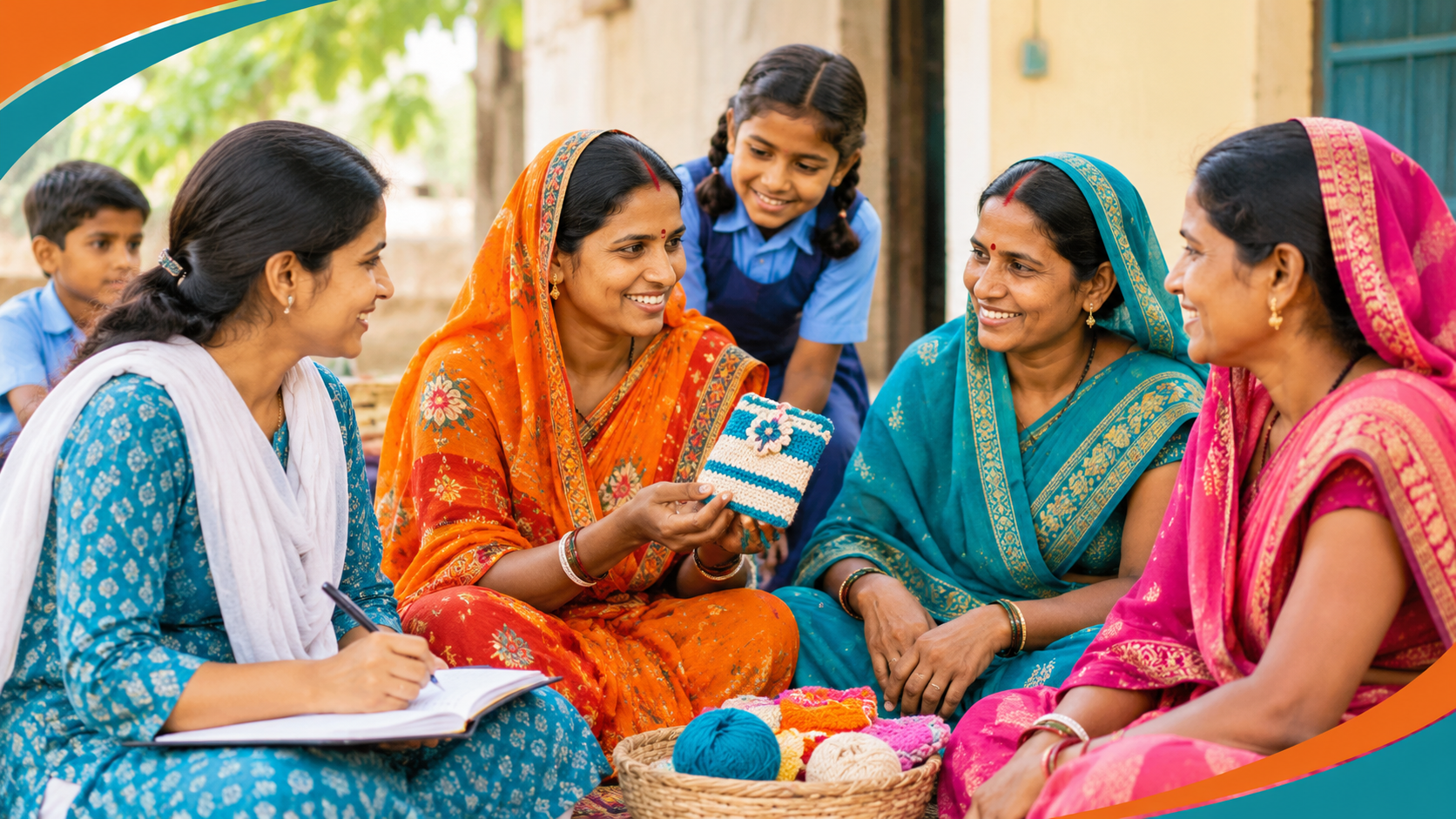
Self-Help Groups (SHGs) have become an important tool for promoting women’s empowerment and rural development in India. They bring women together to save money, access financial services, develop skills, start small businesses, and support one another in improving their livelihoods.
For millions of women living in rural communities, access to financial resources, employment opportunities, and independent decision-making can be limited. Self-Help Groups help address these challenges by creating a platform where women can work collectively, share responsibilities, and build confidence.
Beyond savings and loans, Self-Help Groups for rural women encourage entrepreneurship, financial literacy, social awareness, leadership, and community participation. They help women move towards financial independence while contributing to the economic development of their families and villages.
At Manav Vikas Sanstha (MVS India), we recognise the importance of community-based initiatives in empowering women. Through SHG promotion, skill development, livelihood support, and access to financial resources, we work towards creating sustainable opportunities for rural women.
What Are Self-Help Groups (SHGs)?
A Self-Help Group (SHG) is a small, voluntary association of people, generally from similar economic backgrounds, who come together to support each other through regular savings, collective decision-making, and access to financial services.
In India, women’s Self-Help Groups are particularly important in rural areas because they provide women with opportunities to participate in economic activities and develop financial independence.
Members generally contribute small amounts of money to a common savings fund. The collected savings can be used to provide loans to members for personal needs, education, healthcare, agriculture, or income-generating activities.
Over time, well-managed SHGs can establish connections with banks, financial institutions, government programmes, NGOs, and livelihood opportunities.
The main objectives of Self-Help Groups include:
- Encouraging regular savings habits among women.
- Improving access to affordable credit.
- Promoting financial literacy and banking awareness.
- Supporting small businesses and entrepreneurship.
- Developing leadership and decision-making skills.
- Encouraging collective problem-solving.
- Promoting women’s participation in community development.
Why Are Self-Help Groups Important for Rural Women?
Rural women contribute significantly to agriculture, household management, family businesses, and community activities. However, many continue to face financial and social barriers that limit their opportunities.
Self-Help Groups provide a collective platform to overcome some of these challenges.
Here are the major reasons why SHGs are important for rural women.
1. Promoting Financial Independence
Financial independence is one of the most significant benefits of women’s Self-Help Groups.
Many rural women have limited access to formal banking facilities or independent financial resources. SHGs encourage women to save regularly and manage their collective funds.
Through these savings activities, women learn important financial practices such as:
- Budgeting and money management.
- Maintaining savings records.
- Understanding banking services.
- Managing loans and repayments.
- Planning household expenses.
- Making informed financial decisions.
Financial awareness helps women become more confident in managing their money and participating in household decisions.
2. Providing Access to Loans and Credit Facilities
Access to affordable credit is essential for women who want to start small businesses or expand existing livelihood activities.
Self-Help Groups help members build savings and establish financial discipline. Depending on eligibility and banking arrangements, SHGs can also access loans through formal financial institutions and government-supported programmes.
Women may use these loans for:
- Starting tailoring businesses.
- Purchasing agricultural equipment.
- Buying raw materials for handicrafts.
- Establishing small retail shops.
- Expanding food-processing activities.
- Supporting livestock and dairy businesses.
- Meeting essential household needs.
Access to credit can reduce dependence on informal moneylenders and create opportunities for sustainable income generation.
3. Encouraging Women Entrepreneurship
Self-Help Groups encourage rural women to explore entrepreneurship and self-employment.
By working collectively, women can share responsibilities, combine resources, develop products, and identify business opportunities.
Some common SHG-based business activities include:
- Tailoring and garment production.
- Handicrafts and embroidery.
- Food processing and homemade products.
- Dairy farming and livestock management.
- Organic farming and agricultural products.
- Pickle, papad, and spice production.
- Small retail and local service businesses.
Collective entrepreneurship also allows women to share experiences, reduce certain individual risks, and learn from one another.
With appropriate training, finance, and market connections, these activities can develop into sustainable livelihood opportunities.
4. Building Confidence and Leadership Skills
SHGs provide women with opportunities to participate in meetings, discuss financial matters, solve problems, and make collective decisions.
These activities gradually strengthen communication, teamwork, leadership, and decision-making abilities.
Women who previously had limited opportunities to express their opinions can become more confident in discussing community issues and participating in local development activities.
Leadership opportunities within SHGs may also encourage women to take active roles in village committees, community organisations, and local institutions.
5. Supporting Education and Health Awareness
Self-Help Groups can become useful platforms for spreading awareness about education, healthcare, nutrition, sanitation, and women’s rights.
Through group meetings and community activities, women can exchange information about:
- Girls’ education and school attendance.
- Maternal and child healthcare.
- Menstrual health and hygiene.
- Nutrition and sanitation.
- Government welfare programmes.
- Legal rights and social protection.
- Financial and digital literacy.
When women have access to reliable information, they can make better decisions for themselves and their families.
6. Strengthening Social Support and Community Participation
Rural women may experience challenges related to social restrictions, financial difficulties, limited mobility, or a lack of support.
SHGs create an environment where women can connect with others facing similar challenges.
Group members can share experiences, discuss common concerns, and work together to find solutions.
This collective support can encourage women to participate more actively in community development and social awareness initiatives.
How Do Self-Help Groups Work in Rural India?
Self-Help Groups generally operate through a structured process that encourages participation, savings, financial discipline, and collective responsibility.
Although their structure may vary depending on the organisation and programme, the following steps are commonly involved.
Step 1: Formation of the Group
Women from a village or nearby community come together to establish a Self-Help Group.
Members generally share similar economic circumstances and agree to work towards common financial and social objectives.
Step 2: Regular Savings
Each member contributes an agreed amount to the group’s common savings fund.
Regular savings help members develop financial discipline and create a collective financial resource.
Step 3: Group Meetings
Members meet regularly to discuss savings, loan requirements, repayments, business activities, and community concerns.
These meetings also provide opportunities for financial education and awareness.
Step 4: Internal Lending
Depending on the group’s savings and rules, members may receive small loans from the common fund.
The loans can support household needs, education, healthcare, agriculture, or income-generating activities.
Step 5: Bank Linkages
Eligible SHGs may establish connections with banks and access formal credit facilities.
These linkages help groups improve their financial capacity and explore larger livelihood opportunities.
Step 6: Skill Development and Income Generation
Members may participate in vocational training, entrepreneurship programmes, and livelihood activities.
With appropriate guidance, SHGs can collectively produce goods, offer services, and access local markets.
Role of Government Schemes in Strengthening Self-Help Groups
The Government of India has introduced several initiatives to promote financial inclusion, rural livelihoods, and women’s economic empowerment.
One of the major initiatives is the Deendayal Antyodaya Yojana – National Rural Livelihoods Mission (DAY-NRLM).
The programme aims to strengthen rural livelihoods by organising rural poor households, particularly women, into Self-Help Groups and supporting them through financial inclusion, skill development, and livelihood opportunities.
Important support mechanisms include:
1. DAY-NRLM
DAY-NRLM supports the formation and strengthening of women’s SHGs, promotes financial inclusion, and facilitates access to livelihood opportunities.
2. SHG-Bank Linkage Programme
This initiative connects eligible Self-Help Groups with formal banking institutions.
It helps groups access credit and develop stronger financial management practices.
3. Deendayal Antyodaya Yojana – Urban Livelihoods Mission
The urban livelihoods programme also supports the organisation of urban poor women into SHGs and promotes self-employment and livelihood opportunities.
4. Financial Literacy Initiatives
Financial literacy programmes help women understand banking, savings, credit, digital payments, and responsible financial management.
Together, these initiatives create an enabling environment for women-led economic development.
Challenges Faced by Rural Women’s Self-Help Groups
Although SHGs provide several benefits, they may also face challenges that affect their effectiveness and long-term sustainability.
Understanding these challenges is important for improving women’s empowerment programmes.
1. Limited Financial Resources
Some groups may have limited savings and difficulty accessing sufficient credit to expand their activities.
2. Lack of Business and Technical Skills
Women may have good business ideas but lack the technical knowledge, training, or management skills required to operate sustainable enterprises.
3. Limited Market Access
Producing goods is only one part of running a business. Women also need access to customers, buyers, distribution channels, and competitive markets.
4. Digital Literacy Barriers
Limited access to smartphones, internet connectivity, and digital knowledge can make it difficult for women to use online banking and digital business platforms.
5. Social and Household Responsibilities
Domestic responsibilities and traditional social expectations may limit women’s time and participation in group activities.
6. Financial Management Difficulties
Maintaining records, managing repayments, preparing business accounts, and understanding financial transactions can be challenging without proper guidance.
These barriers highlight the importance of continuous training, institutional support, financial awareness, and market connections.
How NGOs Support Self-Help Groups and Rural Women
Non-governmental organisations play an important role in strengthening Self-Help Groups at the grassroots level.
They help women understand the benefits of collective action and provide support that goes beyond group formation.
Some important ways NGOs support SHGs include:
SHG Formation and Capacity Building
NGOs help organise women into groups, encourage regular participation, and provide guidance on group management and responsibilities.
Financial Literacy and Banking Awareness
Training sessions help women understand savings, banking, loans, financial records, and responsible credit management.
Vocational Training and Skill Development
Practical training in tailoring, handicrafts, food processing, digital literacy, and other livelihood activities helps women develop income-generating skills.
Entrepreneurship Development
NGOs can provide guidance on business planning, product development, pricing, financial management, and enterprise growth.
Market Linkages
Connecting SHGs with buyers, local businesses, retailers, and larger markets can improve the sustainability of women-led enterprises.
Awareness and Leadership Development
NGOs also encourage women to understand their rights, participate in community activities, and develop leadership skills.
By combining financial support, skill development, and community participation, NGOs can help SHGs become stronger and more sustainable.
MVS India’s Contribution to Self-Help Groups and Women Empowerment
At Manav Vikas Sanstha (MVS India), we believe that women’s empowerment requires more than financial assistance. It involves creating opportunities for women to become financially independent, skilled, confident, and active participants in community development.
Through Project POWER and our women empowerment initiatives, MVS India has supported the promotion of Self-Help Groups, access to credit, micro-enterprises, and income-generating activities.
Our approach focuses on helping women access resources and opportunities that can support long-term economic independence.
1. Promoting Self-Help Groups
MVS India supports the formation and promotion of women’s Self-Help Groups to encourage collective savings, financial awareness, and community participation.
SHGs provide women with a platform to work together, discuss common challenges, and explore livelihood opportunities.
2. Improving Access to Financial Resources
Access to credit is important for women who want to start or expand income-generating activities.
Through SHG promotion and financial linkages, MVS India works to improve women’s access to credit and savings mechanisms.
These opportunities can help women reduce dependence on informal moneylenders and explore productive financial activities.
3. Supporting Micro-Enterprises
MVS India promotes micro-enterprises and income-generating activities to strengthen women’s economic participation.
By supporting skill-based livelihoods and entrepreneurship, women can explore opportunities to earn income and improve their financial security.
4. Creating Market Linkages
Market access is essential for the long-term success of women-led businesses.
MVS India’s approach includes creating market linkages that help women entrepreneurs reach broader markets and develop more sustainable income opportunities.
5. Connecting Skill Development with Livelihoods
Skill development can strengthen the activities of Self-Help Groups by helping members acquire practical knowledge and improve product quality.
Women can explore training in tailoring, handicrafts, embroidery, and other livelihood-oriented activities.
Through initiatives such as Project UDDAAN, MVS India also works towards improving employability and promoting entrepreneurship among women and youth.
Learn more about MVS India’s Women Empowerment and Rights Initiatives.
How Self-Help Groups Contribute to Sustainable Rural Development
The impact of Self-Help Groups extends beyond individual women. They can contribute to the economic and social development of entire rural communities.
Economic Development
Women-led enterprises can generate income, create local employment, and strengthen rural economic activities.
Poverty Reduction
Savings, access to credit, and livelihood opportunities can help households improve their financial stability.
Better Family Well-Being
Women with greater financial participation may have more opportunities to contribute to decisions about education, healthcare, nutrition, and household needs.
Social Equality
SHGs encourage women to participate in collective decision-making and challenge traditional barriers to women’s participation.
Stronger Local Institutions
Well-functioning groups can become platforms for community awareness, collective action, and local development.
When supported through training, finance, and market opportunities, Self-Help Groups can become important contributors to sustainable rural development.
Conclusion: Self-Help Groups Are Building Stronger and More Independent Rural Women
Self-Help Groups are much more than savings and lending associations. They create opportunities for rural women to build financial independence, develop skills, start businesses, strengthen confidence, and participate in community development.
By bringing women together, SHGs encourage collective responsibility and provide a platform for economic and social empowerment.
However, their long-term success depends on continuous support through financial literacy, vocational training, entrepreneurship development, access to credit, and market linkages.
At MVS India, we believe that empowering rural women through collective action and sustainable livelihood opportunities is essential for building stronger communities.
When women save together, learn together, and grow together, they create opportunities not only for themselves but also for future generations.
Support Women’s Empowerment with MVS India
Join hands with MVS India to promote women’s financial independence, skill development, livelihood generation, and sustainable rural development.
Explore our women empowerment initiatives and connect with MVS India to support meaningful change.
Frequently Asked Questions (FAQs)
1. What is a Self-Help Group (SHG)?
A Self-Help Group is a voluntary association of individuals, generally from similar economic backgrounds, who come together to save money, access financial services, support one another, and improve their livelihoods.
2. How do Self-Help Groups help rural women?
SHGs help rural women through collective savings, access to credit, financial literacy, skill development, entrepreneurship, leadership opportunities, and community support.
3. What are the main benefits of Self-Help Groups for women?
The major benefits include financial independence, access to loans, savings habits, income generation, business opportunities, confidence building, leadership development, and greater community participation.
4. How do women get loans through Self-Help Groups?
Women can access internal loans through their group’s savings fund. Eligible SHGs may also apply for bank credit through formal SHG-bank linkage arrangements, subject to applicable requirements.
5. What businesses can rural women start through SHGs?
Women can explore tailoring, handicrafts, food processing, dairy farming, agriculture-related activities, embroidery, small retail businesses, and other locally relevant enterprises.
6. What is the role of NGOs in Self-Help Groups?
NGOs support SHG formation, financial literacy, group management, vocational training, entrepreneurship, market linkages, and awareness programmes.
7. What is the role of MVS India in women’s empowerment?
MVS India promotes women’s empowerment through SHG promotion, financial inclusion, skill development, micro-enterprise support, livelihood generation, and community-based initiatives.
8. How do Self-Help Groups contribute to rural development?
SHGs contribute to rural development by encouraging savings, generating income, supporting local businesses, improving women’s participation, and strengthening community institutions.

All Categories
- Annual Reports (1)
- News (34)
- Projects (13)
Tags
+0123 (456) 7899
contact@example.com