

Role of NGOs in Women Empowerment in India: Creating Opportunities and Transforming Lives
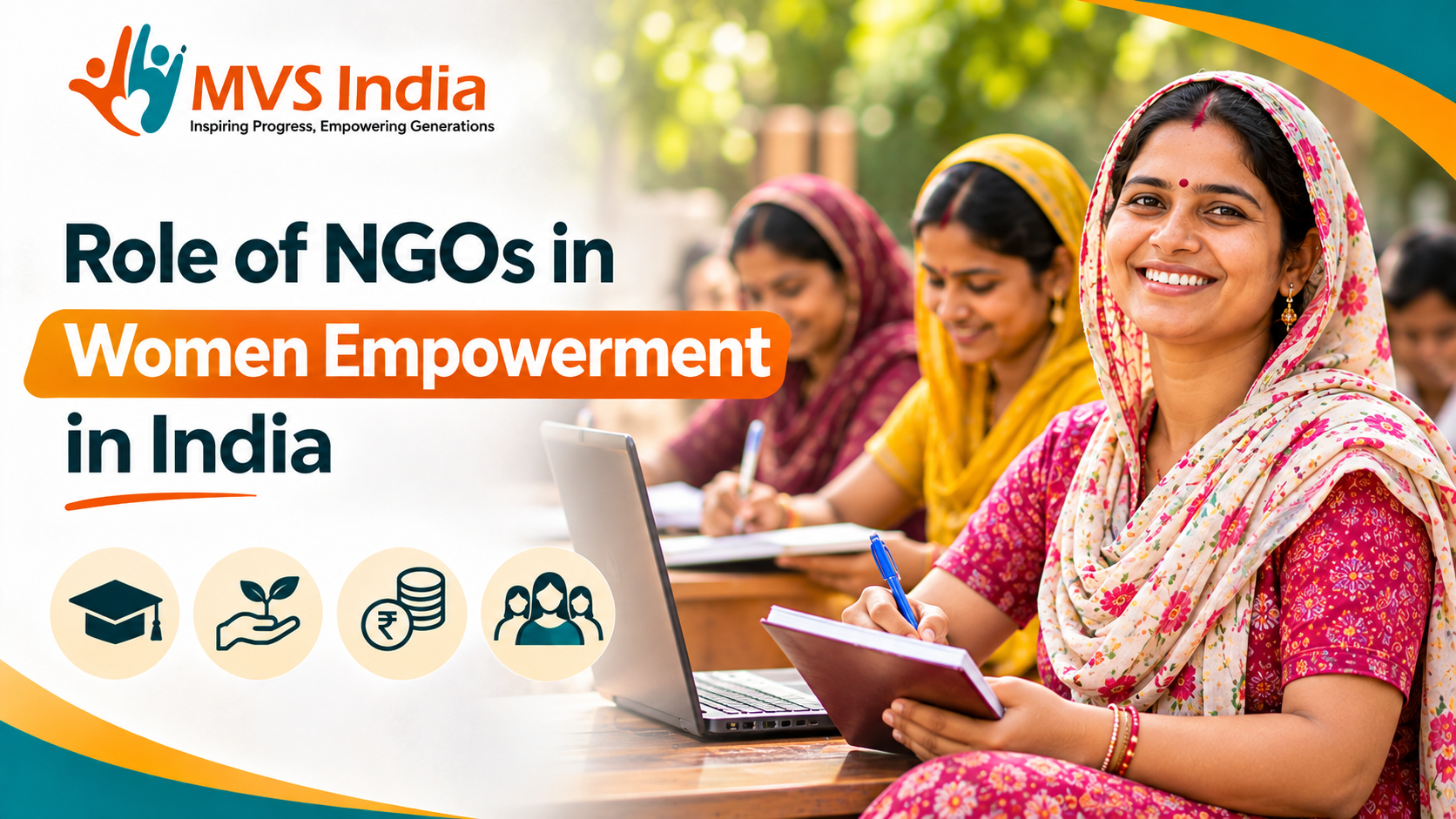
Women empowerment is a fundamental pillar of social progress, economic development, and sustainable growth. In a diverse country like India, empowering women is essential for building inclusive communities, reducing inequalities, and creating equal opportunities for everyone.
Over the years, India has made progress in improving women’s access to education, healthcare, employment, and financial services. However, many women, particularly in rural and underserved communities, continue to face challenges related to economic independence, social discrimination, limited educational opportunities, and unequal access to resources.
This is where Non-Governmental Organizations (NGOs) play a crucial role.
The role of NGOs in women empowerment in India extends beyond providing immediate assistance. NGOs work to create sustainable opportunities by promoting education, skill development, financial inclusion, healthcare awareness, entrepreneurship, and community participation.
Through grassroots initiatives and community-based development programs, NGOs help women build confidence, achieve financial independence, and actively participate in shaping their futures.
Understanding Women Empowerment in India
Women empowerment refers to enabling women to exercise their rights, make independent decisions, access opportunities, and participate equally in social, economic, and political activities.
Empowerment is not limited to employment or financial independence. It also involves access to quality education, healthcare, safety, leadership opportunities, and participation in decision-making processes.
In India, women empowerment is particularly important because social, geographical, and economic inequalities can affect women’s opportunities differently.
The major dimensions of women empowerment include:
-
Economic Empowerment: Improving access to employment, entrepreneurship, financial services, and sustainable livelihoods.
-
Educational Empowerment: Ensuring equal opportunities for learning, vocational education, and skill development.
-
Social Empowerment: Promoting dignity, equality, confidence, and participation in community activities.
-
Health Empowerment: Improving access to healthcare, nutrition, hygiene, and reproductive health awareness.
-
Legal Empowerment: Increasing awareness of women’s rights, legal protections, and available support mechanisms.
-
Leadership Empowerment: Encouraging women to participate in local governance, community development, and decision-making.
NGOs support these interconnected areas through targeted programs designed around the needs of communities.
Why Are NGOs Important for Women Empowerment in India?
NGOs play an important role in connecting underserved communities with development opportunities, essential services, and institutional support.
Many women face barriers such as limited mobility, household responsibilities, lack of financial resources, and insufficient access to information.
NGOs can help address these challenges by working directly with communities, understanding local needs, and developing accessible solutions.
Unlike one-size-fits-all approaches, community-based NGO programs can be adapted to the social, cultural, and economic conditions of specific regions.
By collaborating with government institutions, businesses, community organizations, and local stakeholders, NGOs can help strengthen the reach and effectiveness of women empowerment initiatives.
1. Promoting Education and Literacy Among Women
Education is one of the most effective tools for women empowerment.
Access to quality education helps women develop knowledge, confidence, critical thinking, and decision-making abilities.
However, girls and women in some communities continue to face educational barriers, including financial difficulties, early marriage, household responsibilities, and limited access to learning facilities.
NGOs support women’s education through initiatives such as adult literacy programs, educational awareness campaigns, digital literacy training, and community learning opportunities.
These initiatives can help women:
-
Improve reading, writing, and communication skills.
-
Access information about employment and government schemes.
-
Develop digital and financial literacy.
-
Make informed decisions about healthcare and family well-being.
-
Participate more confidently in economic and social activities.
Education also creates opportunities for intergenerational progress, as educated women can play an important role in supporting their children’s learning and development.
2. Supporting Women’s Economic Empowerment Through Skill Development
Economic independence is a key component of women empowerment.
Many women possess valuable abilities but lack access to structured vocational training, employment networks, and entrepreneurship opportunities.
NGOs help bridge this gap through skill development programs for women that focus on practical, market-relevant skills.
These programs may include tailoring, handicrafts, food processing, digital literacy, retail services, beauty and wellness, and other vocational activities.
Skill development initiatives support women by improving employability, encouraging self-employment, and creating pathways to sustainable income generation.
For example, a woman who receives tailoring training may use her skills to explore employment with a local business or establish a small home-based enterprise.
When vocational training is combined with business mentoring, financial awareness, and market access, it can become a stronger foundation for long-term economic independence.
3. Encouraging Women Entrepreneurship and Self-Employment
Women entrepreneurship contributes to local economic development, employment generation, and financial inclusion.
However, aspiring women entrepreneurs often encounter challenges related to startup capital, business knowledge, customer acquisition, and access to markets.
NGOs can support women entrepreneurs through entrepreneurship development programs that provide practical business knowledge and guidance.
Common areas of support include business planning, pricing strategies, product development, financial management, marketing, and digital selling.
NGOs may also help women connect with financial institutions, Self-Help Groups, and local business networks.
By strengthening entrepreneurial capabilities, these initiatives can help women establish microenterprises and participate more actively in local economies.
4. Strengthening Financial Inclusion Through Self-Help Groups
Self-Help Groups (SHGs) are important community-based mechanisms for promoting women’s financial participation in India.
These groups typically bring together individuals who save collectively, support one another, and explore opportunities to access credit and develop livelihood activities.
NGOs can help mobilize women into SHGs and provide training in financial literacy, record-keeping, group management, and entrepreneurship.
Through SHG-based initiatives, women may gain greater awareness of banking services, savings, budgeting, and responsible borrowing.
SHGs also create opportunities for peer learning, collective decision-making, and leadership development.
When supported by appropriate financial services and market linkages, Self-Help Groups can contribute to sustainable economic empowerment.
5. Improving Women’s Healthcare and Nutrition Awareness
Women’s health is closely connected to their social and economic well-being.
Limited access to healthcare services, inadequate health awareness, and financial barriers can affect women’s ability to pursue education, employment, and other opportunities.
NGOs support women’s health through community awareness programs, preventive healthcare initiatives, nutrition education, and efforts to improve access to essential health services.
Important areas of intervention may include maternal health awareness, menstrual hygiene education, nutrition, preventive health screening, and early identification of health concerns.
Health-focused initiatives can also help women make informed decisions about their well-being and that of their families.
By integrating healthcare awareness with education and livelihood programs, NGOs can contribute to more comprehensive approaches to women empowerment.
6. Promoting Gender Equality and Women’s Rights
Gender equality is essential for building a society where women and men have equal access to opportunities, resources, and decision-making.
Despite progress, discriminatory social norms and unequal access to resources continue to affect women in various communities.
NGOs work to promote gender equality through awareness campaigns, community discussions, legal literacy programs, and advocacy initiatives.
These efforts may address issues such as gender discrimination, access to education, workplace equality, domestic violence awareness, and women’s legal rights.
Community engagement is especially important because meaningful change often requires participation from families, local leaders, and institutions.
By promoting awareness and encouraging dialogue, NGOs can help create environments that support women’s dignity, safety, and equal participation.
7. Empowering Rural Women Through Sustainable Livelihoods
Rural women make significant contributions to agriculture, household enterprises, and community development.
However, many face challenges related to limited employment opportunities, access to technology, financial services, and market connectivity.
NGOs support rural women empowerment through livelihood development initiatives designed around local resources, skills, and economic opportunities.
Such initiatives may include agricultural skill development, food processing, handicraft production, microenterprise development, and financial literacy.
Sustainable livelihood programs aim to strengthen women’s earning capabilities while improving their resilience to economic challenges.
When women gain access to productive skills and resources, they can contribute more effectively to household financial security and local economic development.
8. Developing Women’s Leadership and Community Participation
Women empowerment also involves creating opportunities for women to participate in leadership and decision-making.
NGOs can support leadership development through community meetings, capacity-building workshops, awareness programs, and collective action initiatives.
These activities help women strengthen communication, negotiation, problem-solving, and organizational skills.
Women who participate in community groups and development initiatives may become more confident in expressing their views and contributing to local decisions.
Greater leadership participation can also encourage other women and girls to pursue education, employment, and community involvement.
Challenges Faced by NGOs in Women Empowerment
Although NGOs make valuable contributions, implementing effective women empowerment programs involves several challenges.
| Challenge | Potential NGO Response |
|---|---|
| Limited funding | Develop partnerships and diversify funding sources |
| Social and cultural barriers | Engage families and community leaders |
| Low literacy levels | Provide accessible and practical learning methods |
| Limited market access | Strengthen employer and business linkages |
| Digital exclusion | Promote digital literacy and access to technology |
| Long-term sustainability | Provide mentoring, monitoring, and post-training support |
Addressing these challenges requires collaboration, community participation, and consistent evaluation of development outcomes.
The Role of MVS India in Supporting Inclusive Community Development
Organizations such as MVS India contribute to community development through initiatives focused on healthcare, education, skill development, sustainable livelihoods, and natural resource management.
With more than 26 years of experience in the development sector, MVS India works toward improving opportunities and supporting the well-being of communities.
These interconnected development areas are relevant to women’s empowerment because economic independence, education, health, and access to livelihood opportunities all contribute to women’s ability to participate in society.
Skill development and sustainable livelihood approaches can help strengthen women’s economic capabilities, while education and healthcare initiatives support broader community well-being.
Through collaboration, community engagement, and development-focused interventions, organizations such as MVS India can contribute to creating more inclusive and sustainable opportunities.
The broader objective is to support communities where women have access to the knowledge, resources, and opportunities needed to build secure and independent futures.
How NGOs Contribute to Sustainable Development Goals
Women empowerment initiatives align closely with the United Nations Sustainable Development Goals (SDGs).
| Sustainable Development Goal | Role of NGOs |
|---|---|
| SDG 1 – No Poverty | Supporting income generation and livelihood opportunities |
| SDG 3 – Good Health and Well-Being | Promoting healthcare awareness and access |
| SDG 4 – Quality Education | Supporting literacy and vocational education |
| SDG 5 – Gender Equality | Advancing women’s rights and equal opportunities |
| SDG 8 – Decent Work and Economic Growth | Strengthening employability and entrepreneurship |
| SDG 10 – Reduced Inequalities | Improving inclusion of underserved communities |
By connecting women empowerment with broader development priorities, NGOs can contribute to long-term social and economic progress.
The Future of Women Empowerment in India
The future of women empowerment in India depends on expanding opportunities, strengthening institutional support, and addressing the barriers that prevent women from participating fully in society.
Digital technology, vocational education, entrepreneurship, financial inclusion, and community-based development will continue to be important areas for intervention.
NGOs can strengthen their impact by adopting evidence-based approaches, working with local communities, building strategic partnerships, and monitoring long-term outcomes.
Special attention is needed for women living in rural, remote, and economically underserved regions, where access to essential services and opportunities may remain limited.
Empowering women requires a collective effort involving government institutions, NGOs, businesses, communities, and individuals.
When these stakeholders work together, they can help create an environment where women have greater opportunities to learn, earn, lead, and thrive.
Conclusion
The role of NGOs in women empowerment in India is essential for promoting inclusive development, gender equality, and sustainable economic opportunities.
Through education, skill development, healthcare awareness, entrepreneurship support, financial inclusion, and community engagement, NGOs help women overcome barriers and strengthen their capabilities.
Women’s empowerment is not only about improving individual lives. It is also about building stronger families, more resilient communities, and a more inclusive society.
Organizations such as MVS India, through their commitment to community development and sustainable livelihoods, are part of the broader effort to create meaningful opportunities and lasting social progress.
Empowering women means empowering communities and investing in a more equitable and sustainable future.
Frequently Asked Questions (FAQs)
1. What is the role of NGOs in women empowerment in India?
NGOs support women empowerment by promoting education, vocational training, financial inclusion, healthcare awareness, entrepreneurship, gender equality, and community participation.
2. How do NGOs help rural women in India?
NGOs help rural women through skill development programs, Self-Help Groups, financial literacy, livelihood support, healthcare awareness, and access to economic opportunities.
3. Why are NGOs important for women’s economic empowerment?
NGOs help women access practical skills, business knowledge, financial resources, and livelihood opportunities that can improve economic independence.
4. How do NGOs promote gender equality?
NGOs promote gender equality through awareness campaigns, community engagement, education, legal literacy, and programs that encourage equal opportunities and participation.
5. What is the importance of skill development in women empowerment?
Skill development improves employability, strengthens entrepreneurial capabilities, supports financial independence, and helps women access sustainable livelihood opportunities.
6. How do Self-Help Groups empower women?
Self-Help Groups encourage savings, financial literacy, collective decision-making, access to credit, entrepreneurship, and community leadership.
7. How does MVS India contribute to community empowerment?
MVS India works in development areas including education, healthcare, skill development, sustainable livelihoods, and natural resource management, supporting broader goals of inclusive community development.

All Categories
- Annual Reports (1)
- News (32)
- Projects (13)
Recent Posts
Tags
+0123 (456) 7899
contact@example.com