

Women Empowerment in India: Challenges, Opportunities and the Role of NGOs
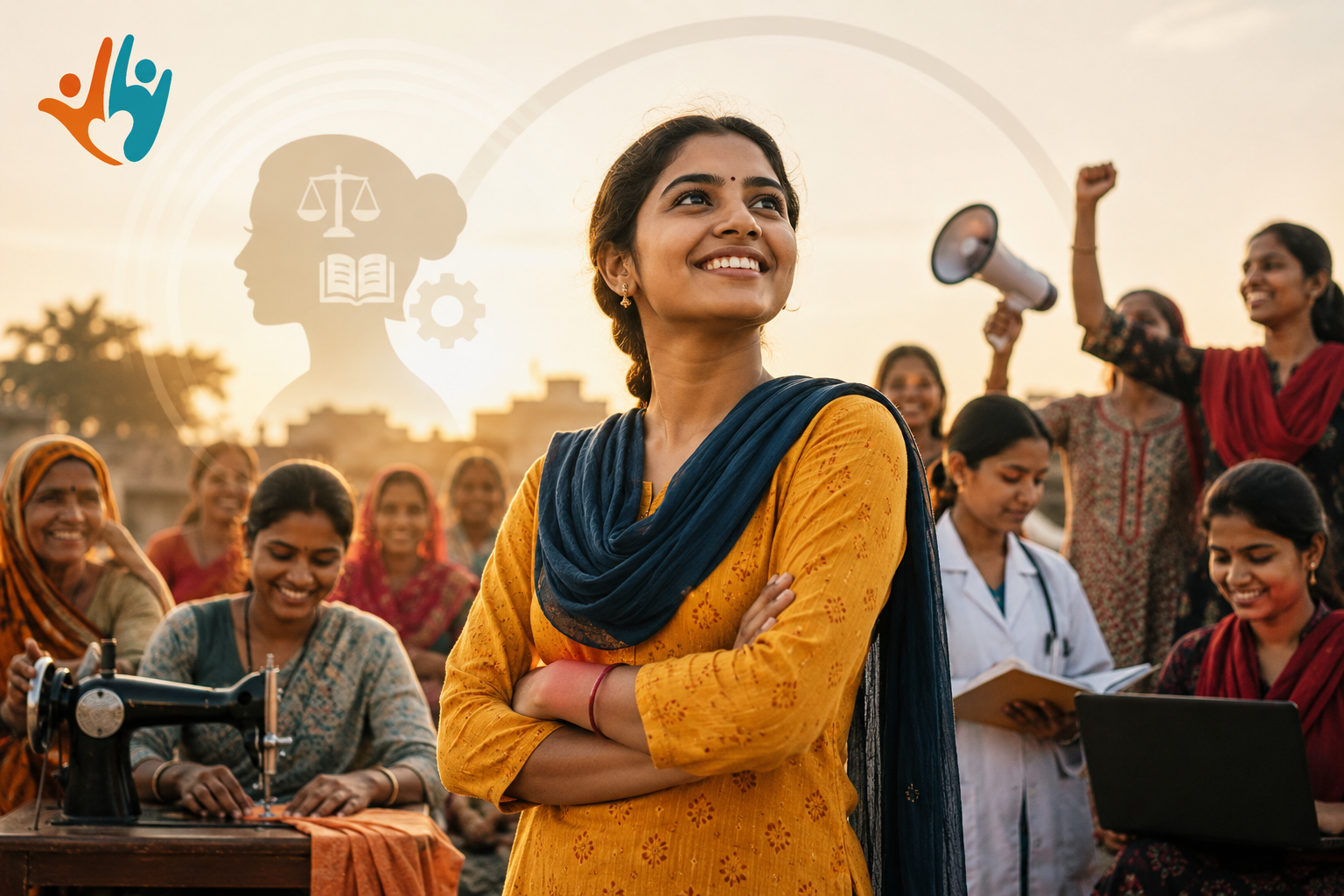
Women empowerment in India is essential for building an inclusive, equitable, and sustainable society. Over the years, India has made progress in women’s education, financial inclusion, political participation, entrepreneurship, skill development, and access to welfare programmes. However, many women—particularly those in rural and economically vulnerable communities—still face barriers related to education, employment, financial independence, safety, digital access, and decision-making.
According to NITI Aayog’s SDG framework, India has seen improvement in several gender-equality indicators, including the female-to-male labour force participation ratio and the ratio of female to male earnings. At the same time, gender gaps continue to require focused intervention.
This is where NGOs working for women empowerment in India can play an important role. By combining grassroots engagement with education, skill development, livelihood support, legal awareness, financial literacy, and community participation, NGOs can help women move towards greater independence and dignity.
What is Women Empowerment?
Women empowerment is the process of enabling women to have greater control over their lives, resources, opportunities, and decisions. It goes beyond simply providing employment or financial assistance.
True empowerment includes:
- Access to quality education
- Skill development and vocational training
- Employment and entrepreneurship opportunities
- Financial and digital literacy
- Awareness of legal rights
- Access to healthcare
- Freedom from discrimination and violence
- Participation in community decision-making
- Leadership opportunities
- Access to government schemes and social security
When women have the knowledge, resources, skills, and confidence to make informed decisions, they can contribute more effectively to their families, communities, and the wider economy.
Why Women Empowerment in India Is Important
Women represent a significant part of India’s population and their participation is essential for sustainable development. Empowering women can create benefits that extend beyond individual beneficiaries.
1. Promotes Economic Growth
When women have access to decent employment, entrepreneurship, vocational skills, and financial resources, they can contribute directly to household and community economies.
India’s female labour force participation has been improving. A 2026 PIB report citing PLFS data stated that female labour force participation increased from 23.3% in 2017–18 to 40% in 2025.
However, improving participation also requires better access to skills, safe workplaces, childcare, finance, markets, and equal opportunities.
2. Improves Education and Family Well-Being
Educated and empowered women are better positioned to make informed decisions related to their children’s education, healthcare, nutrition, and financial planning.
NITI Aayog highlights education, skilling, and micro-financing as important pathways towards women’s empowerment and greater financial independence.
3. Reduces Poverty and Financial Dependence
Women with sustainable livelihoods can contribute to household income and build financial resilience.
Access to:
- Bank accounts
- Savings
- Credit
- Insurance
- Digital payments
- Entrepreneurship support
- Market linkages
can help women become more financially independent.
4. Strengthens Community Development
Empowered women often become active participants in community institutions, self-help groups, local initiatives, and development programmes.
This creates a multiplier effect where one empowered woman can influence her family and community.
5. Supports Gender Equality
Women empowerment is closely connected with gender equality. When women have equal access to education, employment, resources, leadership, and decision-making, communities become more inclusive.
It also contributes directly to UN Sustainable Development Goal 5: Gender Equality. NITI Aayog identifies gender equality and the empowerment of women and girls as a key SDG objective.
Major Challenges of Women Empowerment in India
Despite considerable progress, several barriers continue to affect women’s social and economic empowerment.
1. Limited Access to Quality Education
Education is one of the strongest foundations of empowerment, but educational outcomes are not equal across all communities.
Women and girls in rural, economically disadvantaged, and underserved communities may face challenges such as:
- School dropout
- Early marriage
- Financial constraints
- Limited access to higher education
- Lack of vocational education
- Social restrictions
NITI Aayog’s analysis of NFHS-5 highlighted continuing gender gaps in literacy and years of schooling.
2. Unequal Employment Opportunities
Women may face barriers when entering or remaining in the workforce.
These can include:
- Lack of market-relevant skills
- Unpaid care responsibilities
- Limited mobility
- Workplace discrimination
- Lack of safe transportation
- Limited childcare facilities
- Unequal access to career advancement
Therefore, women empowerment programmes must focus not only on training but also on connecting women with sustainable employment and livelihood opportunities.
3. Financial Dependence
Financial independence is a major component of women’s empowerment.
Women who lack access to independent income, banking facilities, credit, savings, or financial knowledge may have limited control over financial decisions.
Financial literacy and livelihood programmes can help women understand budgeting, savings, digital payments, banking, insurance, and entrepreneurship.
4. Gender-Based Violence
Violence against women remains a serious social challenge.
Domestic violence, workplace harassment, trafficking, exploitation, and other forms of gender-based violence can significantly affect women’s safety, confidence, health, and economic participation.
According to UN Women data, gender-based violence and other gender inequalities remain important areas requiring continued action in India.
This makes legal awareness and community-level support important components of women empowerment programmes.
5. Digital Divide
Digital technology has created new opportunities for education, employment, banking, entrepreneurship, and access to government services.
However, unequal access to smartphones, internet connectivity, digital skills, and online financial services can prevent some women from benefiting from these opportunities.
Digital literacy should therefore be included in modern women empowerment initiatives.
6. Social and Cultural Barriers
Traditional gender roles, early marriage, restricted mobility, unequal household responsibilities, and limited participation in decision-making can affect women’s opportunities.
Changing these patterns requires more than working directly with women. Families, men, community leaders, schools, employers, and local institutions must also participate.
7. Limited Awareness of Women’s Rights
Legal protections alone cannot create empowerment if women are unaware of their rights.
Women need accessible information about:
- Legal protections
- Workplace rights
- Government welfare schemes
- Financial services
- Social security programmes
- Support mechanisms
- Education and employment opportunities
Community-based legal awareness programmes can help bridge this gap.
Opportunities for Women Empowerment in India
Alongside these challenges, India also has significant opportunities to accelerate women’s empowerment.
1. Skill Development and Vocational Training
Market-relevant skills can help women access employment or start their own businesses.
Training can include:
- Tailoring and handicrafts
- Beauty and wellness
- Digital skills
- Food processing
- Retail
- Entrepreneurship
- Computer skills
- Financial literacy
- Other locally relevant vocational skills
However, effective training should be connected with actual market demand, employment opportunities, and market linkages.
2. Women Entrepreneurship
Entrepreneurship provides women with an opportunity to generate income while building financial independence.
Women entrepreneurs can benefit from:
- Business training
- Mentorship
- Access to finance
- Digital marketing skills
- Market linkages
- Product development
- Financial planning
NGOs can support women not just in starting enterprises but also in making them sustainable.
3. Self-Help Groups
Self-Help Groups (SHGs) can create an important platform for collective savings, credit access, entrepreneurship, and community participation.
An effective SHG ecosystem can help women:
- Save collectively
- Access credit
- Start micro-enterprises
- Share knowledge
- Build confidence
- Participate in community decisions
MVS India also focuses on SHG promotion, micro-enterprises, skill-based livelihoods, financial access, and market linkages as part of its women empowerment work.
4. Digital Financial Inclusion
Digital banking and UPI have created opportunities for women to participate more actively in the formal financial system.
Training women in:
- Digital payments
- Mobile banking
- Online banking security
- Savings
- Insurance
- Financial fraud prevention
can strengthen their financial independence.
5. CSR Partnerships
Corporate Social Responsibility can play an important role in scaling women empowerment initiatives.
Companies can support projects focused on:
- Women’s skill development
- Livelihood generation
- Education
- Entrepreneurship
- Financial literacy
- Digital literacy
- Healthcare
- Leadership development
- Gender equality
Partnerships between corporations and experienced NGOs can help convert CSR funding into measurable community impact.
Role of NGOs in Women Empowerment in India
NGOs play a critical role because they often work directly with communities where social and economic challenges are most visible.
Unlike short-term campaigns, effective NGOs can build long-term relationships with beneficiaries and local stakeholders.
1. Providing Skill Development
NGOs can identify local employment opportunities and provide practical vocational training that enables women to earn sustainable incomes.
2. Creating Livelihood Opportunities
Training becomes more effective when women are connected with employment, entrepreneurship, credit, buyers, and markets.
NGOs can therefore act as a bridge between women and livelihood opportunities.
3. Promoting Legal Awareness
NGOs can conduct community awareness sessions that help women understand their rights and available support mechanisms.
Legal literacy can increase confidence and encourage women to seek appropriate assistance when their rights are violated.
4. Supporting Financial Literacy
NGOs can teach women practical financial skills such as:
- Budgeting
- Saving
- Banking
- Digital payments
- Credit management
- Insurance
- Financial fraud awareness
These skills can help women make better financial decisions.
5. Building Women’s Leadership
Empowerment should not stop at earning an income.
Women should also have opportunities to participate in:
- Self-Help Groups
- Community committees
- Local development programmes
- Educational institutions
- Awareness campaigns
- Leadership initiatives
Leadership programmes can help women develop communication, confidence, teamwork, and decision-making skills.
6. Engaging the Community
Sustainable gender equality requires community participation.
NGOs can engage:
- Families
- Men and boys
- Community leaders
- Schools
- Local institutions
- Self-Help Groups
- Government stakeholders
- Corporate partners
This creates an environment where women can participate more freely in education, employment, leadership, and decision-making.
How MVS India Supports Women Empowerment
Manav Vikas Sanstha (MVS India) works toward holistic community development, including women empowerment through community-based interventions. Its women-focused programmes include skill development, vocational training, livelihood promotion, legal awareness, financial literacy, digital literacy, leadership development, and community engagement.
MVS India focuses on helping women move from dependence towards greater self-reliance and economic independence.
Key areas include:
Skill Development:
Providing practical skills that can improve employability and support self-employment.
Livelihood Promotion:
Creating pathways for women to generate sustainable income.
Financial Literacy:
Helping women understand savings, banking, budgeting, digital payments, insurance, and financial planning.
Legal Awareness:
Increasing awareness of women’s rights and available support mechanisms.
Leadership Development:
Encouraging women to participate in community-level decision-making.
Community Engagement:
Working with families, communities, institutions, and other stakeholders to promote gender equality.
MVS India also works with corporate CSR partners and other stakeholders to design and implement women-focused social development programmes.
How Can NGOs Make Women Empowerment Programmes More Effective?
For long-term impact, women empowerment initiatives should move beyond one-time awareness campaigns.
A successful programme should follow a holistic approach:
Step 1: Understand the Community
Conduct baseline assessments to identify the actual needs, barriers, skills, and opportunities available to women.
Step 2: Provide Relevant Skills
Training should be aligned with local market demand rather than being based only on generic vocational courses.
Step 3: Create Livelihood Pathways
Connect trained women with employment, entrepreneurship, credit, markets, and buyers.
Step 4: Build Financial Independence
Introduce financial literacy, banking, savings, digital payments, and responsible credit practices.
Step 5: Increase Legal Awareness
Help women understand their rights and available support systems.
Step 6: Develop Leadership
Encourage women to participate in SHGs, community institutions, and local decision-making.
Step 7: Measure Impact
Track outcomes such as:
- Number of women trained
- Employment generated
- Income improvement
- Businesses started
- Financial accounts accessed
- Leadership participation
- Community engagement
- Beneficiary satisfaction
This approach makes women empowerment programmes more sustainable, transparent, and measurable.
The Future of Women Empowerment in India
The future of women empowerment in India will depend on combining education, technology, skills, finance, entrepreneurship, safety, legal awareness, and community participation.
Government programmes, NGOs, CSR foundations, educational institutions, businesses, and communities all have a role to play.
The increasing participation of women in India’s workforce demonstrates that change is already happening. The next challenge is to make this progress more inclusive and ensure that women from rural and underserved communities can also benefit from emerging economic and digital opportunities.
Women’s empowerment should therefore be viewed not simply as a social initiative but as an essential part of India’s long-term economic and social development.
Conclusion
Women empowerment in India is not a single intervention—it is a long-term process that requires access to education, skills, livelihoods, finance, healthcare, safety, legal awareness, and leadership opportunities.
While India has made meaningful progress, challenges such as unequal employment opportunities, financial dependence, gender-based violence, the digital divide, and social barriers continue to affect millions of women.
NGOs can help bridge these gaps by working directly with communities and creating practical pathways from awareness to skills, skills to livelihoods, and livelihoods to sustainable empowerment.
With stronger collaboration between NGOs, government institutions, communities, and CSR partners, India can create an environment where women are not merely beneficiaries of development but active participants and leaders in it.
Empowering women means strengthening families, communities, and the future of India.
FAQs
1. What is women empowerment in India?
Women empowerment in India is the process of increasing women’s access to education, skills, employment, financial resources, healthcare, legal rights, leadership, and decision-making opportunities.
2. What are the major challenges of women empowerment in India?
Major challenges include limited employment opportunities, financial dependence, gender-based violence, unequal access to education and skills, the digital divide, social barriers, and limited awareness of legal rights.
3. What is the role of NGOs in women empowerment?
NGOs support women through skill development, livelihood programmes, financial literacy, legal awareness, entrepreneurship, leadership development, community engagement, and access to resources.
4. How can CSR support women empowerment?
Companies can support women empowerment through CSR funding for skill development, education, livelihoods, entrepreneurship, financial literacy, healthcare, digital inclusion, and community development programmes.
5. How can I support women empowerment initiatives?
Individuals and organisations can support women empowerment by volunteering, donating, sponsoring skill-development programmes, supporting women-led enterprises, or partnering with experienced NGOs to implement community-based projects.
6. How does MVS India contribute to women empowerment?
MVS India implements women-focused initiatives involving skill development, vocational training, livelihood promotion, financial and digital literacy, legal awareness, leadership development, and community participation.

All Categories
- Annual Reports (1)
- News (27)
- Projects (9)
Tags
+0123 (456) 7899
contact@example.com