

How CSR Can Strengthen Primary Healthcare in Rural India
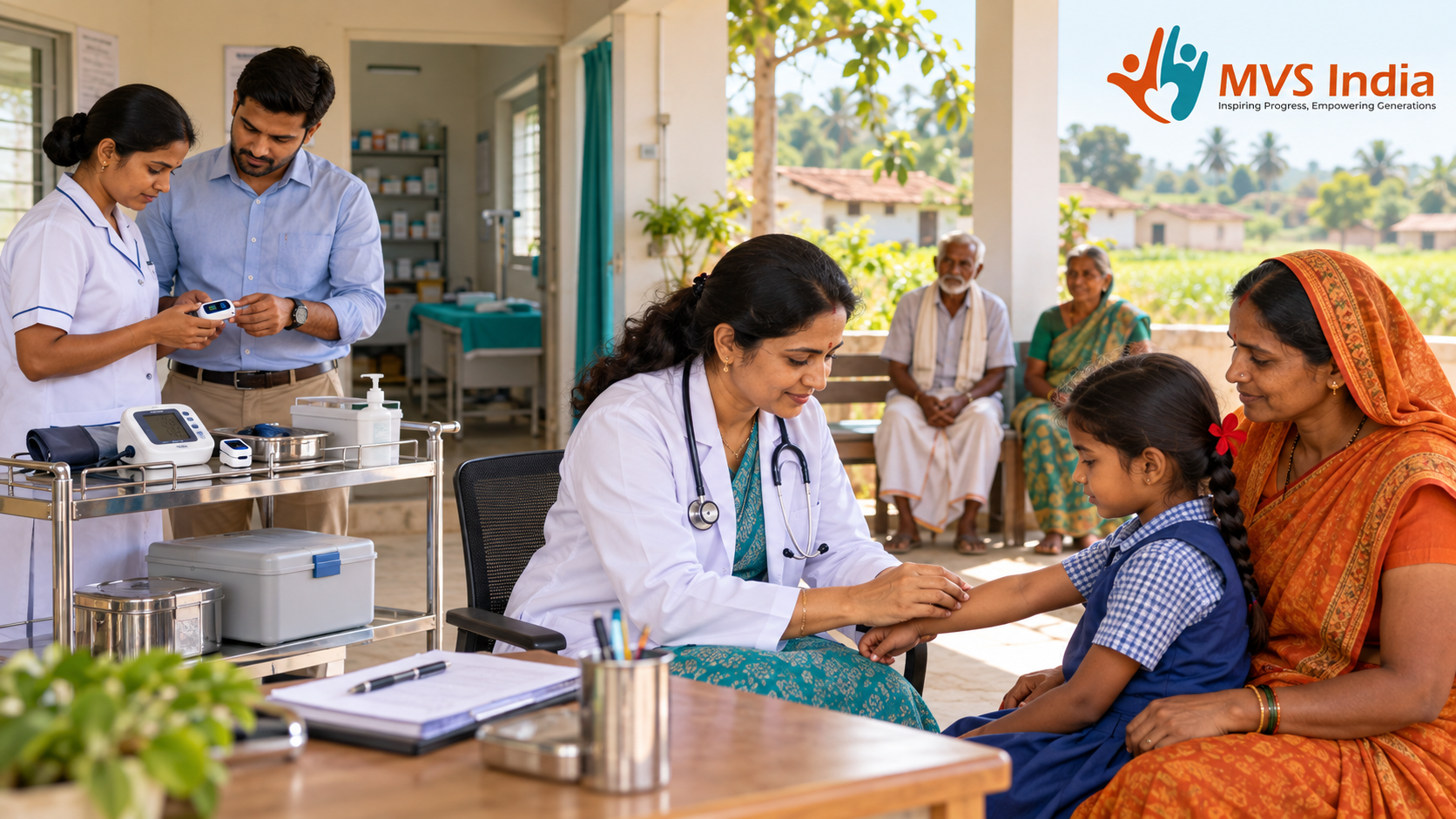
A Healthcare Problem That Starts Miles Away
For a family living in a rural village, getting medical care is not always as simple as finding a nearby hospital.
A mother may need to travel several kilometres for a basic check-up. An elderly person with diabetes may skip regular testing because the nearest diagnostic facility is too far away. A child with recurring health problems may keep getting treated for symptoms without proper follow-up.
The problem is not always the complete absence of healthcare.
Sometimes, the healthcare centre is already there. What is missing may be the right equipment, trained support, diagnostics, digital connectivity, maintenance, awareness, or a reliable referral system.
This is where primary healthcare in rural India becomes so important.
And this is also where Corporate Social Responsibility (CSR) can contribute—not by replacing the public healthcare system, but by helping strengthen the parts of it that communities depend on every day.
Why Primary Healthcare Matters in Rural India
Primary healthcare is often the first place where people interact with the formal healthcare system.
A strong primary healthcare network can help people receive preventive care, early screening, treatment for common conditions, maternal and child healthcare, medicines, health education and referrals when more advanced treatment is required.
India’s Ayushman Arogya Mandir model is built around this broader idea of comprehensive primary healthcare. It aims to bring a wider range of preventive, promotive, curative, rehabilitative and palliative services closer to communities.
That shift is important.
Healthcare should not begin only when a person reaches a large hospital with a serious illness. Ideally, people should have access to basic screening, advice and treatment much earlier.
Where Does CSR Fit Into Rural Healthcare?
CSR can provide additional support for healthcare projects that address genuine community needs.
CSR activities related to healthcare can include promotion of healthcare, preventive healthcare and sanitation, among other eligible activities.
This creates several possibilities for companies looking to build meaningful corporate social responsibility healthcare programmes.
For example, CSR support can be directed towards:
- Improving PHC infrastructure
- Providing appropriate medical equipment
- Strengthening diagnostic services
- Supporting mobile medical units
- Enabling telemedicine
- Improving maternal and child healthcare
- Conducting preventive health screening
- Training and capacity building
- Supporting health awareness programmes
- Improving sanitation and patient facilities
But there is an important difference between spending money on healthcare and strengthening healthcare.
The second requires much more thought.
The PHC May Already Exist. The Real Question Is: How Well Does It Work?
Imagine a Primary Health Centre serving several surrounding villages.
The building is functional. Healthcare workers are available. Patients come every day.
But there is a problem.
Basic diagnostic services are limited. Some equipment needs replacement. Patients who need specialist advice must travel to a larger town. Digital connectivity is unreliable. Community members are not always aware of available services.
Simply constructing another building may not solve these problems.
A better CSR approach could identify the gaps first and then support the PHC with the resources it actually needs.
This is where PHC healthcare projects can create practical value.
CSR Support for PHCs Can Include
- Essential diagnostic equipment
- Patient-monitoring devices
- Digital health tools
- Better waiting and examination areas
- Power-backup solutions where appropriate
- Staff training and capacity building
- Health-screening programmes
- Teleconsultation support
- Community outreach
The objective should not be to make a facility look better.
The objective should be to help it serve patients better.
Strengthening CHC Healthcare and Referral Systems
Primary healthcare does not work in isolation.
A patient may begin treatment at a local facility but later need specialist care or hospitalisation. That makes referral systems an important part of rural healthcare.
Community Health Centres can have an important role within this larger network.
CSR programmes supporting CHC healthcare can therefore focus on areas such as diagnostic capacity, patient facilities, appropriate equipment, digital connectivity, specialist outreach and referral coordination.
For example, instead of asking an elderly patient to travel to a distant city simply for an initial specialist consultation, a CSR-supported programme could explore periodic specialist outreach or teleconsultation where appropriate.
The idea is simple:
Bring the right care closer to the patient whenever possible.
Rural Health Infrastructure Is More Than a Hospital Building
One of the common mistakes in CSR healthcare planning is treating infrastructure as bricks and cement.
Healthcare infrastructure is much broader.
It can include:
- Safe and functional buildings
- Electricity and power backup
- Clean water
- Sanitation
- Medical equipment
- Diagnostic facilities
- Medicine storage
- Digital connectivity
- Waste-management systems
- Accessible patient areas
- Reliable maintenance
That gives CSR organisations an important lesson:
Before funding a new asset, understand the healthcare system around it.
A sophisticated machine that nobody is trained to operate is not an effective healthcare solution.
Likewise, equipment without maintenance can quickly become an unused asset.
Diagnostics: A Small Improvement With a Big Impact
Consider someone living with high blood pressure.
If regular screening is easily available at a nearby health facility, the condition can be identified and managed earlier.
Now consider the opposite situation.
The patient has to travel a long distance for testing, loses a day’s wages, pays for transport and eventually decides to postpone the visit.
This is why diagnostic access matters.
CSR can complement existing healthcare efforts by supporting locally relevant diagnostic capacity, screening initiatives, awareness and follow-up systems.
The focus should be on useful access, not simply purchasing expensive technology.
Technology Can Reduce the Distance Between Rural Patients and Specialists
Geography remains one of the biggest challenges in rural healthcare.
Technology cannot replace every physical healthcare service, but it can reduce some unnecessary travel.
Teleconsultation, digital records, remote support and health information systems can help connect local healthcare facilities with wider medical networks.
A CSR programme could therefore consider technology where there is a clear use case.
But technology should solve a real problem.
There is little value in introducing a sophisticated digital platform if healthcare workers cannot use it easily or the facility lacks reliable connectivity.
Maternal, Child and Preventive Healthcare Need Equal Attention
CSR healthcare programmes often receive attention for visible infrastructure projects.
But some of the most valuable interventions can be less visible.
Maternal health awareness.
Child health screening.
Nutrition education.
Anaemia screening.
Hypertension and diabetes screening.
Health education in schools and communities.
These initiatives may not produce a dramatic photograph of a newly built facility.
But they can help people identify health risks earlier and understand when professional care is needed.
That is why prevention should remain an important part of CSR in rural healthcare India.
From One-Time Donation to Long-Term Impact
A company can donate equipment today.
But what happens two years later?
Is it still working?
Are healthcare workers trained to use it?
Are patients actually using the service?
Is someone responsible for maintenance?
These questions separate a short-term donation from a sustainable CSR programme.
A stronger model looks something like this:
Needs Assessment → Planning → Implementation → Training → Maintenance → Monitoring → Impact Measurement
This approach may require more planning at the beginning, but it gives the project a better chance of producing lasting value.
What a Practical CSR Healthcare Project Could Look Like
Imagine a CSR organisation selects a cluster of rural healthcare facilities.
Instead of immediately announcing a large infrastructure project, it begins with a needs assessment.
The assessment identifies:
- Limited screening for chronic diseases
- Diagnostic gaps
- Poor digital connectivity
- Need for healthcare-worker training
- Low community awareness
- Weak follow-up after referrals
The CSR programme then addresses these gaps together.
It supports suitable equipment, trains staff, enables teleconsultation, conducts community screening and creates a monitoring system.
Now the investment is not just an equipment donation.
It becomes a healthcare-strengthening programme.
That difference matters.
How Companies Can Make CSR Healthcare More Effective
Before launching a project, companies should ask five simple questions.
-
What Is the Actual Problem?
Do not begin with a predetermined solution.
Begin with the community.
-
Who Will Use the Project?
A healthcare project should be designed around patients and healthcare workers—not only CSR reporting requirements.
-
Who Will Maintain It?
Every equipment, technology or infrastructure project needs an ownership and maintenance plan.
-
How Will Success Be Measured?
Instead of only reporting money spent, consider meaningful indicators such as patients served, screenings completed, referrals supported, healthcare workers trained and service utilisation.
-
What Happens After CSR Funding Ends?
Sustainability should be considered from day one.
The Bigger Opportunity for CSR in Rural India
India has a large network of primary healthcare facilities serving rural and semi-urban communities.
The opportunity, therefore, is not simply about creating healthcare facilities from scratch.
It is also about making existing healthcare systems stronger, more accessible and more useful to the people they serve.
CSR can contribute by filling carefully identified gaps and supporting innovative, community-focused solutions.
What Makes a CSR Healthcare Project Truly Valuable?
The strongest CSR healthcare projects are not necessarily the ones with the biggest budgets.
They are the ones that understand the problem before proposing the solution.
They ask:
What does this community need?
What does the healthcare facility need?
What can CSR realistically improve?
And most importantly:
Will this intervention continue creating value after the project is completed?
That mindset can turn CSR from a yearly expenditure into a long-term social investment.
Frequently Asked Questions
How can CSR strengthen primary healthcare in rural India?
CSR can support PHC infrastructure, diagnostics, medical equipment, telemedicine, healthcare-worker training, preventive screening, maternal and child health programmes and community awareness initiatives.
What role can CSR play in rural health infrastructure?
CSR can support practical infrastructure gaps such as facility upgrades, sanitation, electricity, diagnostic areas, digital connectivity, patient facilities and essential medical equipment, depending on local needs.
How can companies support PHC healthcare through CSR?
Companies can begin with a needs assessment and then support suitable equipment, diagnostics, training, technology, preventive healthcare or infrastructure in partnership with appropriate healthcare and implementation organisations.
Can CSR support CHC healthcare in rural areas?
Yes. CSR healthcare programmes can support suitable CHC-level interventions such as equipment, diagnostics, patient facilities, specialist outreach and technology-enabled healthcare, subject to applicable CSR requirements and local planning.
Why are diagnostics important in rural healthcare?
Accessible diagnostics can help identify health conditions earlier and support appropriate treatment and follow-up. Reducing the need to travel long distances for basic testing can also improve access.
How can CSR healthcare projects become sustainable?
Sustainability requires more than funding. Projects should include needs assessment, staff training, maintenance, stakeholder coordination, monitoring and a clear plan for what happens after the CSR funding period.
Is healthcare an eligible CSR activity in India?
Healthcare, including preventive healthcare and sanitation, is included among the activities covered under the CSR framework. Specific projects should be checked against the applicable CSR rules and requirements before implementation.
Conclusion: Build Healthcare Where People Live
For a rural family, better healthcare does not always mean building a bigger hospital.
Sometimes it means a working diagnostic machine at the local PHC.
Sometimes it means a trained healthcare worker who can identify a health problem early.
Sometimes it means a teleconsultation that saves a patient a long journey.
And sometimes it simply means making an existing healthcare centre function better.
That is the real opportunity for CSR.
Corporate social responsibility healthcare initiatives can help strengthen the healthcare ecosystem that rural communities already depend on—one facility, one service and one community at a time.
If your organisation is looking to develop a CSR programme focused on primary healthcare in rural India, the first step should be a proper needs assessment. From PHC and CHC strengthening to diagnostics, technology, preventive healthcare and rural health infrastructure, the right intervention begins with understanding the real problem.
Want to create a CSR healthcare initiative with measurable, long-term community impact? Connect with our team to discuss your rural healthcare goals and explore a practical implementation strategy.

All Categories
- Annual Reports (1)
- News (30)
- Projects (13)
Tags
+0123 (456) 7899
contact@example.com