

How Companies Can Build High-Impact Rural Healthcare CSR Projects
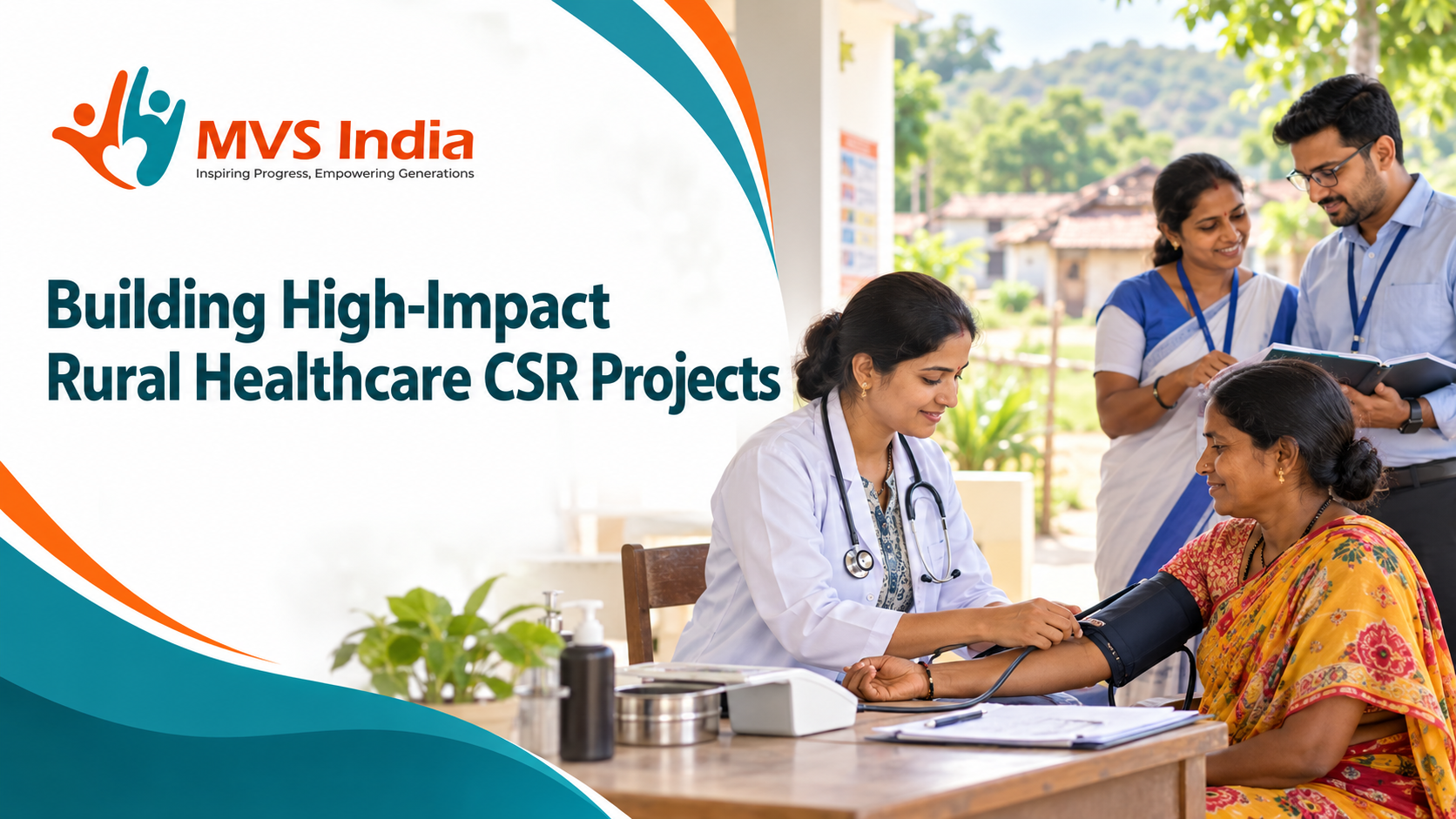
Rural healthcare remains one of the most important areas where corporate social responsibility can create measurable community impact. While healthcare facilities and government health services have expanded across India, many rural and underserved communities still face challenges related to timely diagnosis, specialist access, preventive care, maternal and child health, chronic disease screening, medicines, and health awareness.
This is where well-designed CSR healthcare projects can make a meaningful difference.
However, funding a health camp or distributing medicines for a few days is not the same as building a sustainable healthcare programme. High-impact CSR requires companies to understand the actual health needs of a community, select the right intervention, work with capable implementation partners, establish measurable outcomes, and continuously monitor whether the programme is improving access and health behaviour.
For companies planning healthcare CSR projects in India, the key question should not simply be, “How much should we spend?” The more useful question is:
How can CSR investment create measurable, accessible, and sustainable healthcare outcomes for rural communities?
This article explains a practical approach to designing and implementing rural healthcare CSR projects, from needs assessment and project planning to monitoring, evaluation, and long-term impact.
Why Rural Healthcare Is an Important CSR Focus
Healthcare challenges in rural areas are often connected to more than the availability of a hospital or doctor.
A person living in a remote village may have a primary healthcare facility nearby but still delay treatment because of transportation costs, lack of awareness, limited diagnostic services, inconvenient timings, or the absence of specialist care.
Similarly, a community may have access to basic treatment but lack preventive screening for diabetes, hypertension, anaemia, tuberculosis, eye problems, or other health conditions.
This means an effective rural healthcare programme needs to address the complete healthcare journey.
A strong CSR programme can focus on areas such as:
- Preventive health screening
- Maternal and child healthcare
- Adolescent health and awareness
- Nutrition and anaemia prevention
- Non-communicable disease screening
- Mobile healthcare services
- Telemedicine and digital health
- Diagnostic support
- Medicine access
- Eye and oral healthcare
- Health awareness and behaviour change
- Referral and follow-up services
- Emergency transportation
- Healthcare infrastructure improvement
- Water, sanitation and hygiene interventions
The right combination depends on the actual needs of the target population.
Start With a Community Health Needs Assessment
One of the biggest mistakes in CSR project planning is deciding the intervention before understanding the problem.
For example, an organisation may decide to launch mobile medical camps because they appear suitable for rural communities. But if the major issue in a particular area is maternal healthcare, anaemia, hypertension, or lack of referral support, a generic medical camp may not produce meaningful long-term results.
A community health needs assessment should therefore be the starting point.
The assessment can examine:
- Population size and demographics
- Distance from existing healthcare facilities
- Common health conditions
- Maternal and child health indicators
- Availability of doctors and health workers
- Diagnostic facilities
- Medicine availability
- Referral mechanisms
- Transportation barriers
- Awareness levels
- Existing government health services
- Health-seeking behaviour
- Vulnerable groups
- Seasonal health challenges
The objective is to identify the gap between healthcare availability and healthcare accessibility.
This distinction is important because a facility may technically exist, while people may still be unable or unwilling to use it.
Define the Target Population and Geography
A CSR healthcare project should have a clearly defined geographic and demographic scope.
Instead of saying that a programme will “support rural healthcare,” define:
- Number of villages
- District or block
- Approximate population
- Target households
- Primary beneficiary groups
- Project duration
- Healthcare issues being addressed
For example, a project could target several underserved villages within a defined radius of a primary health facility and focus on preventive screening, maternal health, and referral support.
Clear geographical boundaries make CSR project implementation easier to manage and make impact measurement more reliable.
They also prevent a common problem: spreading resources too thinly across a large population.
Choose the Right CSR Healthcare Project Model
There is no single model that works for every rural community. Companies can choose one intervention or combine multiple approaches depending on the assessment.
-
Mobile Healthcare Units
Mobile healthcare units can bring basic medical services closer to communities that face transportation or geographic barriers.
- A typical unit may provide:
- General medical consultation
- Basic diagnostics
- Screening
- Medicines
- Health education
- Referral support
- Follow-up services
The effectiveness of a mobile healthcare programme depends heavily on route planning, staffing, community mobilisation, clinical protocols, record-keeping, and referral systems.
A van that visits a village once without follow-up may have limited long-term value. A structured service with regular visits and patient tracking can produce much stronger continuity of care.
-
Preventive Health Screening
Preventive healthcare is another strong area for CSR investment.
Projects can focus on early identification of:
- Diabetes
- Hypertension
- Anaemia
- Eye conditions
- Oral health problems
- Malnutrition
- Other priority health conditions
The important point is that screening should not be treated as the outcome.
If someone is identified with a health problem, the programme should have a system for counselling, referral, treatment linkage, and follow-up.
Screening without follow-up creates data; screening with follow-up can create health outcomes.
-
Maternal and Child Healthcare
CSR programmes can support maternal and child health through awareness, screening, counselling, referral support, nutrition interventions, and follow-up.
Depending on local needs, interventions may include:
- Antenatal care awareness
- Maternal nutrition
- Anaemia screening
- Newborn care awareness
- Immunisation awareness
- Growth monitoring
- Adolescent health education
- Referral support for high-risk cases
These programmes can be implemented alongside existing public health systems rather than creating completely parallel structures.
-
Digital and Telehealth Services
Digital healthcare can help rural communities connect with doctors and specialists who may not be physically available locally.
A digital health programme may include:
- Teleconsultation
- Digital patient records
- Remote specialist consultation
- Electronic referrals
- Follow-up reminders
- Health data management
However, technology should solve a genuine access problem. Installing digital equipment without reliable connectivity, trained staff, patient support, and clinical workflows can result in low utilisation.
-
Healthcare Infrastructure
Some communities require infrastructure improvements rather than only outreach services.
CSR support can potentially focus on:
- Primary healthcare facility upgrades
- Diagnostic equipment
- Patient waiting areas
- Maternal and child health facilities
- Water and sanitation infrastructure
- Accessibility improvements
- Basic medical equipment
Infrastructure projects should include a plan for maintenance and utilisation. A newly installed facility or piece of equipment has limited impact if it is not operational after the project ends.
Selecting the Right CSR Implementation Partner
The choice of CSR implementation partner can significantly influence project quality.
Companies should avoid selecting a partner only because it offers a low project cost or has a strong presentation.
A potential partner should be assessed on several factors.
Healthcare expertise
Does the organisation have experience implementing healthcare programmes rather than only general community activities?
Geographic presence
Does the partner understand the local community, language, healthcare system, and administrative environment?
Medical team
Check the qualifications, experience, staffing structure, and clinical responsibilities of the proposed team.
Government coordination
A good project should understand how it will interact with existing public healthcare services and referral networks.
Monitoring capability
Ask how beneficiary records, services delivered, referrals, follow-ups, and outcomes will be documented.
Financial transparency
The partner should be able to clearly explain:
- Project costs
- Staffing expenses
- Equipment costs
- Operational expenses
- Administrative costs
- Monitoring costs
- Reporting structure
Previous project evidence
Past performance should be assessed through measurable results rather than only photographs, event counts, or testimonials.
Build a Clear CSR Project Implementation Plan
Once the intervention and partner are selected, the project needs an implementation framework.
A practical plan should define:
Project objective → Activities → Outputs → Outcomes → Impact
For example:
Objective: Improve access to preventive healthcare in underserved rural communities.
Activities:
- Conduct regular outreach clinics
- Screen adults for selected health conditions
- Provide health counselling
- Refer high-risk patients
- Conduct follow-up visits
Outputs:
- Number of outreach clinics conducted
- Number of people screened
- Number of consultations provided
- Number of referrals made
Outcomes:
- Increased early detection
- Increased referral completion
- Improved treatment linkage
- Improved awareness and preventive health behaviour
Impact:
- Improved access to appropriate healthcare
- Reduced delays in seeking treatment
- Better management of identified health conditions
This structure prevents the programme from becoming activity-driven.
Set Measurable KPIs Before the Project Starts
A CSR project is easier to manage when you define success before implementation begins.
Useful healthcare CSR indicators can include:
Outreach indicators
- Villages covered
- Outreach sessions conducted
- Households reached
- Beneficiaries registered
Service indicators
- Consultations delivered
- Diagnostic tests completed
- Medicines distributed
- Screening tests conducted
- Teleconsultations completed
Referral indicators
- Patients identified for referral
- Referrals completed
- Patients receiving follow-up
- Treatment linkage rate
Outcome indicators
- Percentage of screened beneficiaries with follow-up
- Change in awareness levels
- Change in treatment adherence
- Increase in early healthcare utilisation
- Improvement in selected health indicators
Not every project needs dozens of KPIs. A smaller number of meaningful indicators is usually easier to monitor and communicate.
CSR Monitoring and Evaluation Should Be Continuous
CSR monitoring and evaluation is not something that should happen only at the end of a project.
Monitoring should happen throughout implementation.
A useful system can operate at three levels.
Monthly monitoring
Track basic programme performance:
- Activities completed
- Beneficiaries reached
- Staff attendance
- Supplies
- Medical consultations
- Screening numbers
- Referrals
Quarterly review
Analyse trends and identify operational problems.
Questions may include:
Which villages have low participation?
Which services are most frequently used?
- Are referrals being completed?
- Are repeat beneficiaries receiving follow-up?
- Is the programme reaching vulnerable groups?
- Are project targets realistic?
End-line evaluation
At the end of the project, compare the baseline situation with the results achieved.
This is where CSR impact assessment becomes important.
The evaluation should go beyond saying that thousands of people attended health camps.
Instead, it should examine what changed because of the programme.
Measure Impact, Not Just Activities
Consider two statements:
Statement A:
“50,000 people were reached through healthcare camps.”
Statement B:
“Screening identified previously undiagnosed health risks, and a defined proportion of high-risk beneficiaries completed referral and follow-up.”
The first is an output.
The second begins to demonstrate an outcome.
For stronger CSR impact assessment, companies should distinguish between:
- Inputs
- Activities
- Outputs
- Outcomes
- Long-term impact
This distinction helps CSR teams understand whether their investment is creating actual change.
Use Technology for Better Monitoring
Technology can improve the quality of healthcare CSR monitoring when used appropriately.
A digital monitoring system can help track:
- Beneficiary registration
- Patient history
- Screening results
- Referrals
- Follow-ups
- Service utilisation
- Geographic coverage
- Staff performance
- Monthly project indicators
Dashboards can also help CSR teams identify underperforming locations and compare actual performance against project targets.
However, technology should support programme management rather than become the programme itself.
Also consider data privacy, informed consent, access control, and responsible handling of health information.
Design for Sustainability From Day One
A CSR healthcare project should not be designed around the assumption that CSR funding will continue forever.
Before launching the programme, companies and implementation partners should ask:
- Who will operate the service after the CSR period?
- Can existing health facilities absorb the intervention?
- Can local health workers continue selected activities?
- Can referral networks remain functional?
- Who will maintain equipment?
- How will patient follow-up continue?
- What happens when project funding ends?
Sustainability can come through integration with existing healthcare systems, capacity building, community participation, institutional partnerships, and strengthening local health infrastructure.
Avoid These Common Mistakes
Several issues repeatedly reduce the effectiveness of rural healthcare CSR programmes.
Focusing only on beneficiary numbers
A large beneficiary count does not automatically indicate large impact.
Conducting one-time camps
One-time medical camps can provide immediate support but may not address chronic or recurring health needs.
Ignoring referrals
Detecting a serious health condition without helping the patient access appropriate treatment creates an incomplete intervention.
Choosing geography without research
A project should be based on documented need rather than convenience alone.
Using too many indicators
Excessive reporting can make teams focus on data collection rather than service quality.
Underfunding monitoring
Monitoring and evaluation should be included in the project design and budget from the beginning.
Creating parallel systems unnecessarily
Where suitable public health infrastructure already exists, CSR programmes can strengthen and complement it instead of duplicating services.
A Practical Framework for High-Impact CSR Healthcare Projects
Companies can use the following framework when developing a new rural healthcare initiative:
Step 1: Identify the healthcare gap
Conduct a baseline study and understand the community’s most important healthcare barriers.
Step 2: Define the target group
Specify geography, population, vulnerable groups, and expected beneficiary numbers.
Step 3: Select the intervention
Choose between mobile healthcare, preventive screening, maternal and child health, digital health, infrastructure, specialist support, or a combination.
Step 4: Select an implementation partner
Evaluate the healthcare situation before implementation so that future CSR investment is more accountable and helps companies understand the difference their programmes are actually making in the local healthcare gap. Once that gap is clearly understood, the company can select the appropriate intervention and implementation partner, establish measurable indicators, and assess expertise, local presence, team capability, governance, reporting, and previous results.
Step 5: Develop the project plan
Define objectives, activities, timelines, responsibilities, budget, KPIs, and reporting mechanisms.
Step 6: Establish baseline data
Record the situation before implementation so that future changes can be measured.
Step 7: Implement with regular monitoring
Track service delivery, beneficiary reach, quality, referrals, and follow-up.
Step 8: Conduct impact assessment
Compare baseline and end-line results and identify measurable changes.
Step 9: Document lessons
Record what worked, what did not, and which interventions should be modified.
Step 10: Build a sustainability strategy
Plan how successful interventions can continue, scale, or integrate with existing systems.
How Companies Can Create More Meaningful Healthcare CSR Outcomes
The strongest CSR healthcare projects are not necessarily the ones with the largest budgets. They are projects where resources are connected to clearly identified needs and measurable outcomes.
A company investing in rural healthcare should therefore think beyond the number of camps conducted or people reached.
A stronger approach is to build a complete pathway:
Identify the problem → reach the community → provide quality services → detect health risks → refer patients → follow up → measure outcomes → improve the programme.
This approach makes CSR investment more accountable and helps companies understand the difference their programmes are actually making.
Final Thoughts
Rural healthcare CSR has the potential to address some of the most persistent barriers faced by underserved communities, but meaningful impact requires more than financial support.
Successful programmes combine needs assessment, appropriate intervention design, capable implementation, community participation, monitoring, evaluation, and sustainability.
For companies exploring healthcare CSR projects in India, the starting point should always be the local healthcare gap. Once that gap is clearly understood, the company can select the appropriate intervention and implementation partner, establish measurable indicators, and create a monitoring system that tracks both services and outcomes.
The ultimate objective should be simple: not just to deliver healthcare activities, but to make healthcare more accessible, preventive, continuous, and measurable for the communities the CSR programme is intended to serve.
A well-designed rural healthcare CSR project can therefore move from short-term service delivery to a structured model of long-term community health improvement.
Frequently Asked Questions
-
What are CSR healthcare projects?
CSR healthcare projects are initiatives funded or supported by companies to improve access to healthcare and promote better health outcomes among underserved communities. These projects can include preventive screening, mobile healthcare services, maternal and child health, diagnostics, health awareness, telemedicine, and healthcare infrastructure.
-
How can companies build effective rural healthcare CSR projects?
Companies can start by identifying local healthcare needs through a baseline or community needs assessment. They can then define the target population, select an appropriate healthcare intervention, appoint a capable implementation partner, establish measurable KPIs, and continuously monitor and evaluate project outcomes.
-
What are some common healthcare CSR projects in India?
Common healthcare CSR projects in India include mobile healthcare units, preventive health screening, maternal and child healthcare, nutrition programmes, eye-care services, digital healthcare, diagnostic support, healthcare infrastructure development, health awareness programmes, and referral services.
-
Why is a CSR implementation partner important?
A CSR implementation partner can provide the local expertise, healthcare professionals, community relationships, operational capacity, and monitoring systems required to execute a healthcare programme effectively. The partner should be selected based on relevant experience, geographic presence, transparency, and measurable project outcomes.
-
How should companies measure the impact of healthcare CSR projects?
Companies can measure impact by tracking both outputs and outcomes. Useful indicators may include beneficiaries reached, screenings conducted, consultations delivered, referrals completed, treatment follow-ups, changes in health awareness, and improvements in selected health indicators.
-
What is CSR monitoring and evaluation?
CSR monitoring involves regularly tracking project activities, beneficiaries, service delivery, targets, and performance. Evaluation examines whether the project achieved its intended outcomes and what changed as a result of the intervention. Together, they help companies improve programme effectiveness and accountability.
-
What is CSR impact assessment in healthcare?
CSR impact assessment evaluates the actual changes created by a healthcare programme rather than simply counting activities. It can compare baseline and end-line data to understand changes in healthcare access, awareness, screening, treatment linkage, follow-up, or other relevant health outcomes.
-
How can rural healthcare CSR projects become sustainable?
Sustainability can be improved by strengthening existing healthcare systems, training local health workers, developing community participation, establishing referral networks, planning equipment maintenance, and integrating suitable project activities with existing public or community healthcare services.
-
What should companies consider when selecting a healthcare CSR project?
Companies should consider the community’s healthcare needs, target population, geographic coverage, existing healthcare infrastructure, expected outcomes, implementation capacity, project duration, budget, monitoring requirements, and long-term sustainability.
-
How can companies ensure CSR healthcare projects reach the right beneficiaries?
Companies can use community-level needs assessments, clearly defined geographic areas, beneficiary criteria, local mobilisation, beneficiary registration, service utilisation data, and periodic monitoring. This helps ensure that programmes reach underserved and priority populations rather than only easily accessible beneficiaries.

All Categories
- Annual Reports (1)
- News (30)
- Projects (11)
Tags
+0123 (456) 7899
contact@example.com