

From Screening to Referral: Building a Better Rural Healthcare Journey
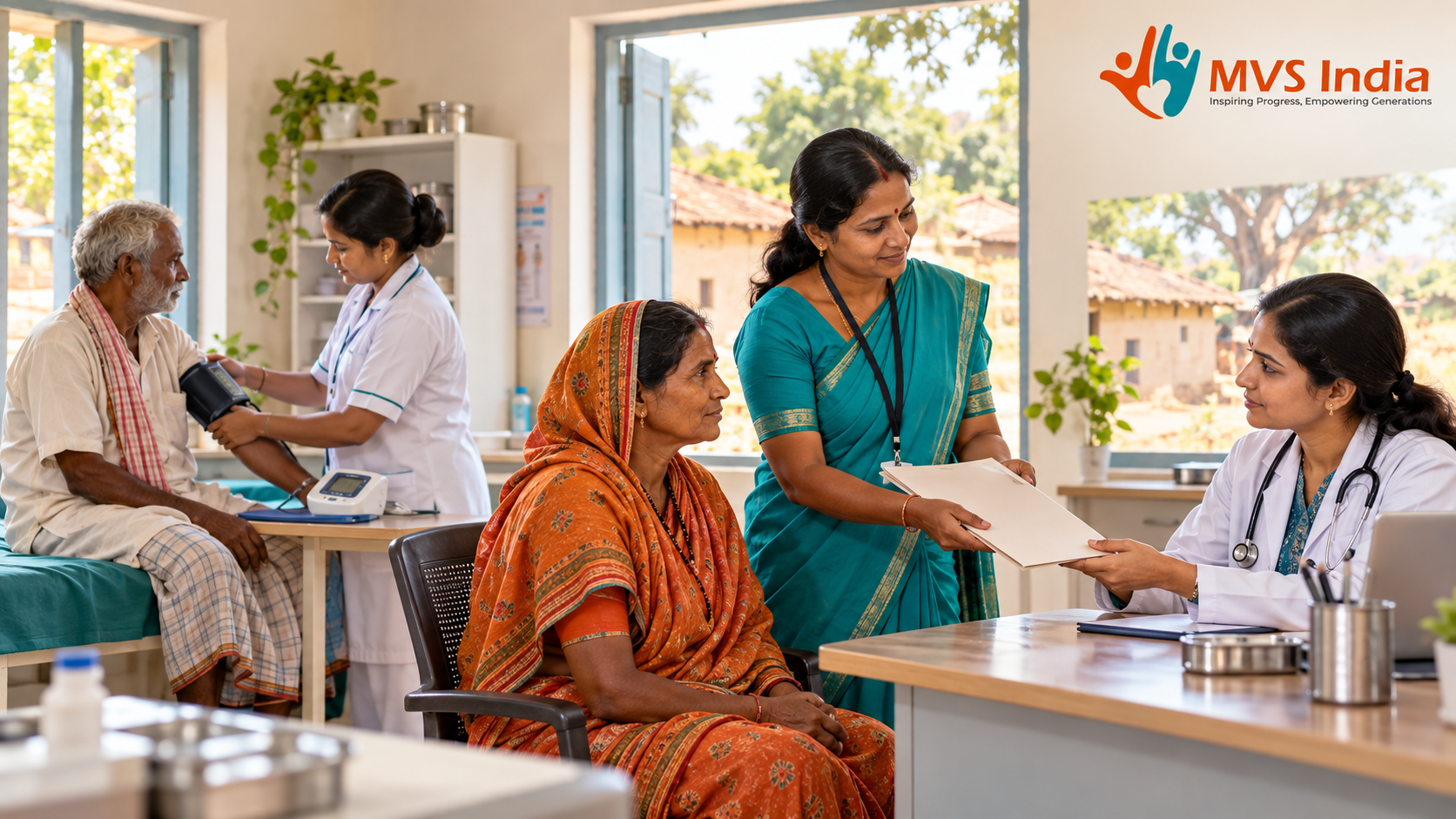
For many people living in rural communities, accessing healthcare is not simply a matter of finding a doctor. The journey may involve travelling long distances, waiting for an appointment, paying for diagnostic tests, arranging transportation, and deciding whether a health problem is serious enough to require medical attention.
This is why improving rural healthcare requires more than increasing the number of health camps or consultations.
A person may be screened for a health condition, but what happens after an abnormal result? Who explains the result? Where does the patient go next? How is the referral made? Who confirms that the patient reached the facility? And what happens after treatment?
These questions are at the centre of an effective rural healthcare journey.
Rural health screening can play an important role in identifying health risks at an earlier stage. But screening creates meaningful value only when it is connected to appropriate diagnosis, referral, treatment, and follow-up.
A stronger model looks like this:
Community outreach → Health screening → Risk identification → Early diagnosis → Patient referral → Treatment → Follow-up → Continuity of care
This article explains how organisations, healthcare providers, NGOs, and community programmes can build a more connected healthcare pathway for rural populations.
What Is Rural Health Screening?
Rural health screening is the process of identifying potential health risks or conditions among people living in rural and underserved communities before symptoms become severe or complications develop.
Screening programmes can focus on different health needs depending on the population and local disease burden.
Common areas include:
- Blood pressure screening
- Blood glucose screening
- Anaemia screening
- Eye screening
- Oral health screening
- Nutritional assessment
- Maternal health screening
- Child health assessment
- Screening for selected infectious diseases
- Screening for other priority non-communicable diseases
The exact screening package should be based on local needs, available resources, clinical guidelines, and the capacity to provide follow-up care.
The objective should not be to screen as many people as possible simply to increase programme numbers.
The objective is to identify people who may need further assessment and connect them with appropriate care.
Why Screening Alone Is Not Enough
Imagine a healthcare team visits a village and screens 500 people.
During the programme, several individuals are found to have elevated blood pressure or abnormal blood glucose levels.
The screening activity may be considered successful because hundreds of people were reached.
But there is another question:
What happened to the people who received abnormal results?
If they were simply told to visit a hospital without any assistance, many may never complete the next step.
Reasons can include:
- Lack of transportation
- Cost concerns
- Lack of awareness
- Fear of hospitals
- Distance from the referral facility
- Uncertainty about where to go
- Family responsibilities
- Inability to understand the screening result
- Lack of follow-up communication
This is why health screening and referral should be planned as one connected process rather than two separate activities.
A screening programme identifies potential health risks. A referral system helps convert that information into appropriate medical action.
The Rural Healthcare Journey Has Multiple Stages
A better healthcare model looks at the entire patient journey rather than one individual service.
Stage 1: Community Mobilisation
Before screening begins, communities need to know:
- Why screening is being conducted
- Who should participate
- Where and when services will be available
- What types of tests will be performed
- What happens if a health risk is identified
Community health workers, local organisations, schools, community groups, and other trusted local channels can help communicate this information.
Good mobilisation can improve participation and help reduce misconceptions around preventive healthcare.
Stage 2: Registration and Basic Assessment
Once a person arrives for screening, basic information should be recorded according to the programme’s requirements.
This may include:
- Age
- Sex
- Relevant health history
- Existing conditions
- Previous treatment
- Basic measurements
- Risk factors
A consistent registration process helps healthcare teams understand the patient’s context and makes subsequent follow-up easier.
Stage 3: Screening
The next step is the actual health screening.
Screening should be performed using appropriate equipment, trained personnel, and defined protocols.
For example, a programme may identify people who require further evaluation based on blood pressure, blood glucose, haemoglobin, vision, or another relevant indicator.
Importantly, screening results should be interpreted appropriately.
A screening result is not always the same as a confirmed diagnosis.
That distinction is essential.
Screening and Diagnosis Are Different
One of the most important concepts in community healthcare is the difference between screening and diagnosis.
Screening generally identifies people who may be at higher risk or who require additional assessment.
A diagnosis requires appropriate clinical evaluation and, where necessary, confirmatory testing.
For example, an abnormal screening result may indicate that a person needs further medical assessment. It should not automatically be treated as a confirmed diagnosis.
This is where early diagnosis becomes important.
When people with potential health problems are identified early and successfully connected to appropriate medical services, treatment can begin before the condition becomes more difficult or expensive to manage.
Stage 4: Risk Classification
Not every screening participant will require the same level of care.
A useful programme can classify beneficiaries according to the next action required.
For example:
- Low risk:General health education and routine monitoring
- Moderate risk:Counselling and repeat screening or primary healthcare consultation
- High risk:Clinical assessment and referral
- Urgent concern:Immediate medical attention or emergency referral
The exact categories should be designed by qualified healthcare professionals according to the condition being addressed.
This approach helps healthcare teams prioritise patients who need more immediate attention.
Stage 5: Building a Patient Referral System
A patient referral system is the bridge between community-level screening and higher-level healthcare.
Without a structured referral mechanism, a screening programme can identify problems without ensuring that people receive appropriate care.
An effective referral system should answer five basic questions:
- Who needs referral?
- Where should the patient go?
- How will the referral be communicated?
- How will the patient reach the facility?
- How will the programme know whether the referral was completed?
These questions should be addressed before the screening programme starts.
What Makes a Referral System Effective?
A strong referral system does more than hand a patient a piece of paper.
It should ideally include:
- Defined referral facilities
- Clear referral criteria
- Referral documentation
- Patient counselling
- Contact information
- Transportation guidance where appropriate
- Appointment or facility coordination when possible
- Follow-up tracking
- Escalation mechanisms for urgent cases
The system should also clearly define the responsibilities of the community team, healthcare provider, implementation organisation, and referral facility.
Stage 6: Connecting Patients to Primary Healthcare Services
Not every health issue requires a specialist hospital.
Many health conditions can be assessed, managed, and monitored through appropriate primary healthcare services.
A well-designed rural programme should therefore understand the local healthcare ecosystem.
This may include:
- Community-level health workers
- Primary healthcare facilities
- Public health centres
- Private healthcare providers where appropriate
- Diagnostic facilities
- Specialist hospitals
- Emergency services
- Pharmacies or medicine-access points
The objective is to connect the patient with the appropriate level of care.
This reduces unnecessary pressure on higher-level facilities while making healthcare more accessible to communities.
Stage 7: Referral Completion Matters More Than Referral Numbers
Suppose a programme identifies 1,000 people who need further medical assessment and provides all of them with referrals.
It may report:
1,000 referrals generated.
But this number does not tell us how many people actually reached the healthcare facility.
A better indicator is:
Referral completion rate = completed referrals ÷ total referrals requiring follow-up × 100
Tracking referral completion provides a much clearer picture of whether the programme is actually connecting patients to care.
Other useful indicators may include:
- Percentage of high-risk patients receiving follow-up
- Time between screening and referral
- Time between referral and consultation
- Number of patients completing recommended diagnostic tests
- Number of patients beginning treatment
- Number of patients returning for follow-up
The exact indicators should be selected according to the programme’s objectives and clinical context.
Stage 8: Follow-Up Is Where Continuity of Care Begins
Referral should not be considered the end of the programme.
A patient may receive a referral but still face barriers after reaching the facility.
Follow-up can help determine whether the recommended next step was completed.
Depending on the programme, follow-up may involve:
- Phone calls
- Community health worker visits
- Repeat consultations
- Treatment reminders
- Follow-up screening
- Referral status updates
- Support for navigating healthcare services
This is especially important for chronic health conditions that require ongoing management rather than a single treatment.
How Community-Based Healthcare Can Strengthen the Journey
Community-based healthcare brings appropriate health services closer to where people live.
This approach can be particularly useful in areas where distance, transportation, or limited awareness creates barriers to formal healthcare.
Community-based programmes can support:
- Health education
- Preventive screening
- Basic health assessment
- Maternal and child health support
- Nutrition awareness
- Chronic disease follow-up
- Referral coordination
- Treatment adherence support
Community-level workers can also help identify people who may otherwise remain outside the healthcare system.
However, community-based services should operate within appropriate clinical and referral frameworks. They should complement professional medical care rather than replace services that require qualified clinical assessment.
Using Technology to Strengthen Rural Referral
Digital tools can improve coordination between community screening teams and referral facilities.
A digital patient record can help authorised healthcare teams track:
- Screening results
- Risk classification
- Referral status
- Consultation history
- Follow-up dates
- Treatment information where appropriate
- Repeat screening
A simple dashboard can also help programme managers identify cases that have remained pending.
For example, if a patient was referred but has not completed the next step within the expected period, the programme team may be able to initiate follow-up.
Technology can therefore make the referral process more visible and manageable.
However, digital systems should be designed around actual operational needs. Technology alone does not solve healthcare access problems.
Overcoming Common Rural Referral Barriers
A rural healthcare programme should anticipate barriers rather than discovering them after implementation.
Transportation
Distance can prevent people from completing referrals.
Possible programme-level responses include transportation guidance, coordination with available services, or other locally appropriate support mechanisms.
Cost
Even when screening is free, follow-up diagnosis or treatment may involve costs.
Programmes should understand what services are available through existing healthcare systems and where financial barriers may arise.
Lack of Awareness
Patients may not understand why a follow-up consultation is necessary.
Simple counselling can explain the importance of the next step without creating unnecessary fear.
Language and Communication
Information should be delivered in a language and format that the community understands.
Fear or Stigma
Some health conditions may carry social stigma. Confidentiality, respectful communication, and community education are important.
Lack of Continuity
If the same patient interacts with multiple organisations without shared processes, information can be lost.
A defined referral pathway can reduce this problem.
Measuring the Success of a Rural Health Screening Programme
A programme should measure more than the number of people screened.
A practical measurement framework can include four levels.
- Reach
- Number of villages covered
- Number of people registered
- Number of people screened
- Demographic distribution of beneficiaries
- Screening Outcomes
- Number of abnormal results
- Number of people requiring further assessment
- Percentage of high-risk cases identified
- Referral Outcomes
- Number of referrals generated
- Referral completion rate
- Time taken to complete referrals
- Number of patients receiving further assessment
- Health Outcomes
Depending on the programme, this could include:
- Improvement in health knowledge
- Improved treatment adherence
- Better follow-up rates
- Improved management of identified conditions
- Increased use of appropriate primary healthcare services
This framework helps move the programme from an activity-based model to an outcome-based model.
Why Early Diagnosis Should Be a Programme Objective
Early diagnosis is valuable because many health conditions can become more difficult to manage when identified late.
A rural screening programme can create an opportunity to identify potential health problems before they result in severe symptoms or complications.
But early diagnosis depends on a connected pathway.
The sequence is:
Awareness → Screening → Risk identification → Clinical assessment → Diagnosis → Treatment → Follow-up
If any major link is missing, the overall benefit may be reduced.
For example, screening without diagnosis leaves uncertainty.
Diagnosis without treatment does not solve the health problem.
Treatment without follow-up may result in poor continuity.
That is why healthcare programmes should be designed around the complete journey.
Designing a Better Health Screening and Referral Programme
Organisations planning a rural healthcare initiative can use the following framework.
Step 1: Understand the Local Health Needs
Conduct a baseline assessment to understand the most relevant health challenges and barriers.
Step 2: Define the Target Population
Specify the villages, population groups, age groups, and priority beneficiaries.
Step 3: Select Screening Priorities
Choose screening areas based on local needs, clinical relevance, available resources, and the capacity for follow-up.
Step 4: Map Healthcare Facilities
Identify primary healthcare facilities, diagnostic centres, hospitals, specialists, and emergency services that can receive referred patients.
Step 5: Define Referral Protocols
Establish clear criteria for when and where patients should be referred.
Step 6: Train the Field Team
Healthcare workers and programme staff should understand screening procedures, documentation, communication, referral processes, and confidentiality.
Step 7: Establish Patient Tracking
Create a reliable mechanism to record screening results and monitor referrals and follow-ups.
Step 8: Monitor Referral Completion
Do not stop measurement after screening. Track whether patients reached the next stage of care.
Step 9: Evaluate Outcomes
Compare programme performance against baseline data and defined objectives.
Step 10: Improve the Programme
Use monitoring data to identify bottlenecks and adjust outreach, screening, referral, or follow-up processes.
What a High-Quality Rural Healthcare Journey Looks Like
A successful programme should feel simple from the patient’s perspective.
A person should be able to:
- Learn about available healthcare services
- Access screening close to the community
- Receive clear information about the result
- Understand whether further assessment is required
- Know where to go next
- Receive support navigating the referral process
- Reach the appropriate healthcare facility
- Receive further medical evaluation
- Continue treatment or monitoring where required
- Receive follow-up support
Behind this simple experience is a coordinated system of healthcare professionals, community workers, programme managers, referral facilities, data systems, and monitoring processes.
Common Mistakes to Avoid
Treating Screening as the Final Outcome
Screening is a starting point, not the complete healthcare intervention.
Measuring Only the Number of Beneficiaries
High beneficiary numbers do not necessarily mean strong health outcomes.
Giving Referrals Without Tracking Them
A referral that is never completed does not create the same value as a successfully completed referral.
Ignoring Existing Healthcare Infrastructure
Programmes should understand and, where appropriate, strengthen existing primary healthcare and referral networks.
Overcomplicating the Technology
A simple, reliable tracking system can be more useful than an advanced system that field teams cannot consistently use.
Forgetting Patient Communication
Patients need to understand their results and the reason for the next step.
Failing to Plan Follow-Up
Without follow-up, programmes may identify health problems without knowing whether patients ultimately received care.
The Future of Rural Healthcare Is a Connected Journey
Improving rural healthcare is not only about bringing more services into villages. It is about making different parts of the healthcare system work together.
Rural health screening can help identify health risks earlier. Community-based healthcare can bring preventive services closer to households. Primary healthcare services can provide initial clinical management. A structured patient referral system can connect people to the appropriate level of care. Follow-up can then help maintain continuity.
The result is a more connected healthcare journey:
Screen → Identify → Explain → Refer → Diagnose → Treat → Follow up
This model shifts the focus from individual healthcare activities to the experience and needs of the patient.
Conclusion
A rural healthcare programme should not be judged only by how many people it reaches or how many screenings it conducts.
The more important question is what happens after the screening.
If a person with a potential health problem is identified, receives clear information, reaches the right healthcare facility, completes the recommended assessment, receives appropriate treatment, and is followed up when necessary, the screening activity becomes part of a meaningful healthcare pathway.
For organisations working to strengthen rural healthcare, the goal should therefore be to build a system where screening and referral work together.
By combining community-based healthcare, appropriate rural health screening, early diagnosis, accessible primary healthcare services, structured referrals, and consistent follow-up, programmes can reduce gaps between identifying a health problem and receiving appropriate care.
The journey from screening to referral is not just an operational process. It is the connection that can turn a single healthcare interaction into a more continuous and patient-centred model of rural healthcare.

All Categories
- Annual Reports (1)
- News (30)
- Projects (10)
Tags
+0123 (456) 7899
contact@example.com