

How Skill Development Can Empower Women in Rural India
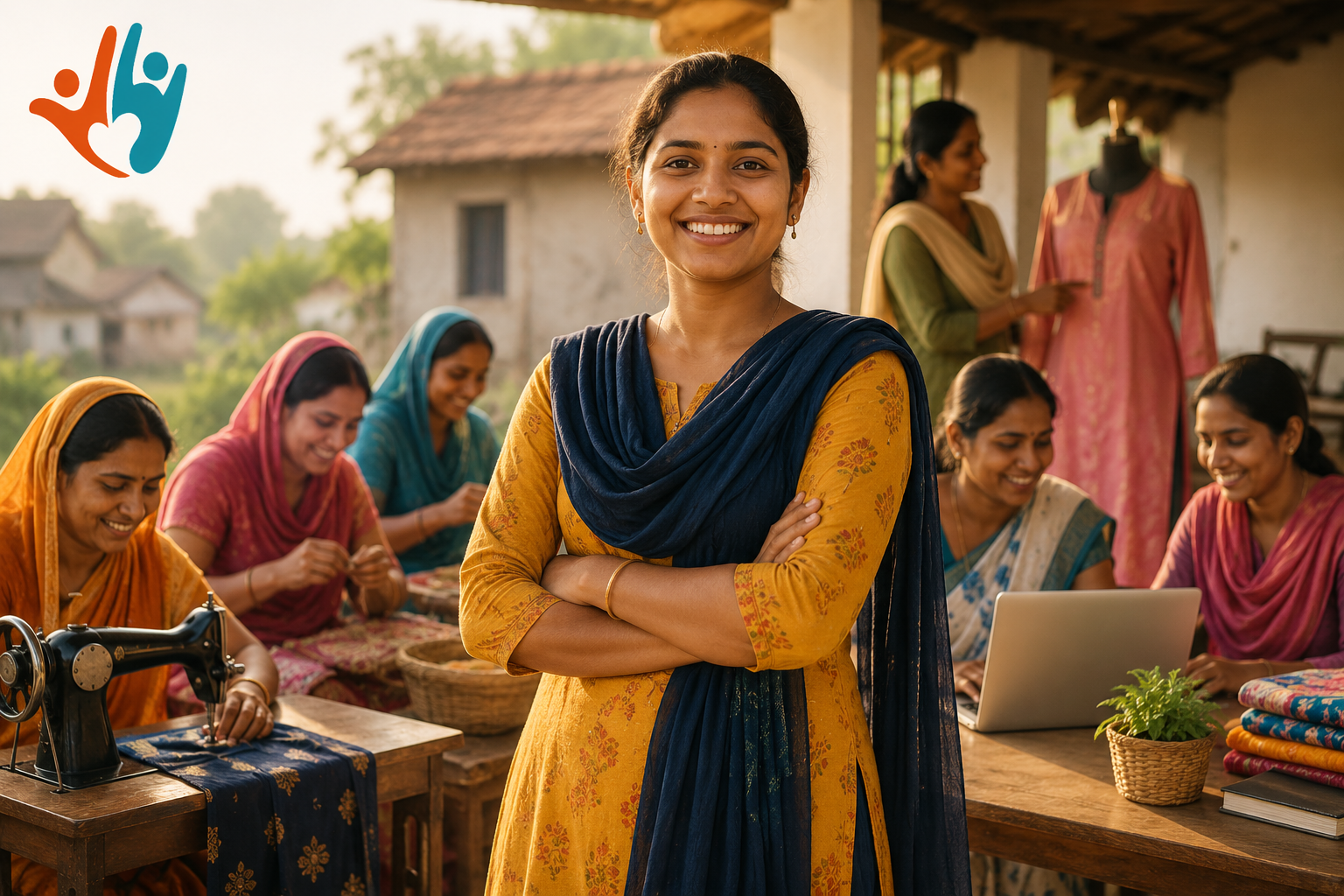
For many women in rural India, empowerment begins with an opportunity to learn, earn, and make independent decisions.
Women contribute significantly to their families and communities, yet many continue to face barriers such as limited access to education, employment, financial resources, technology, and market opportunities. Skill development for women in rural India can help address these challenges by providing practical knowledge and creating pathways to employment, entrepreneurship, and sustainable livelihoods.
Skill development is not simply about learning a profession. When combined with financial literacy, market access, mentorship, and community support, it can help women build confidence, increase household income, and participate more actively in economic and social decision-making.
India’s focus on rural livelihoods and women’s collectives has also expanded considerably. Under DAY-NRLM, more than 10 crore rural women had been mobilised into over 90 lakh Self-Help Groups (SHGs) by 2025, creating a large platform for financial inclusion, livelihoods, and entrepreneurship.
What Is Skill Development for Women?
Skill development for women refers to providing women with practical, vocational, technical, digital, entrepreneurial, and life skills that can improve their ability to earn an income and participate in the workforce.
Depending on local demand and women’s interests, training can include:
- Tailoring and apparel
- Handicrafts and traditional crafts
- Beauty and wellness
- Food processing
- Agriculture-related activities
- Digital skills
- Computer training
- Retail and sales
- Healthcare support
- Entrepreneurship
- Financial literacy
- Digital marketing
- Small-business management
The most effective programmes are designed around local market demand rather than providing training in isolation.
Why Skill Development Matters for Rural Women
Skill development can create a bridge between a woman’s existing potential and real economic opportunities.
1. It Creates Opportunities for Income
One of the most direct benefits of vocational training is improved access to income-generating opportunities.
A woman who learns tailoring, food processing, beauty services, digital work, handicrafts, or another marketable skill may be able to:
- Find employment
- Start a home-based business
- Offer services locally
- Sell products through markets
- Work as part of a Self-Help Group
- Develop a small enterprise
This can help reduce financial dependence and strengthen household income.
2. It Builds Financial Independence
Financial independence is an important part of women empowerment in rural India.
When women earn their own income, they can have greater participation in decisions related to:
- Household expenses
- Children’s education
- Healthcare
- Savings
- Investments
- Business decisions
- Future planning
However, earning an income is only one part of financial empowerment. Women also need knowledge of banking, savings, credit, insurance, and digital payments.
Government programmes are increasingly combining skills with financial inclusion. In 2026, the Ministry of Rural Development reported that more than 3.81 crore women SHG members received financial literacy training during FY 2025–26.
From Training to Livelihood: The Real Path to Empowerment
Simply completing a training course does not automatically result in empowerment.
For skill development programmes to create lasting impact, there needs to be a clear pathway:
Training → Certification → Employment/Enterprise → Market Access → Income → Financial Independence
This is why NGOs and development organisations have an important role to play.
A woman trained in tailoring, for example, may still struggle to earn if she does not have access to a sewing machine, raw materials, customers, finance, or market linkages.
Therefore, successful women skill development programmes should combine training with post-training support.
3. Skill Development Encourages Women Entrepreneurship
Not every rural woman wants to work in a formal job.
For many women, entrepreneurship and self-employment can provide a more flexible way to generate income while managing household responsibilities.
Skill-based businesses may include:
- Tailoring units
- Beauty services
- Food and catering businesses
- Handicraft enterprises
- Small retail businesses
- Dairy and livestock activities
- Food processing
- Local service businesses
- Digital services
With appropriate training, mentoring, financial support, and market access, small livelihood activities can gradually develop into sustainable enterprises.
4. It Strengthens Self-Help Groups
Self-Help Groups are an important part of rural women’s economic empowerment.
SHGs allow women to come together, save collectively, access credit, share knowledge, and explore income-generating activities.
As of July 2026, the Government reported that 92 lakh SHGs under DAY-NRLM covered 10.05 crore rural women.
Skill development can make these groups even more effective by helping members develop practical skills and collectively explore business opportunities.
For example, an SHG could support women in:
- Learning a marketable skill
- Creating products or services
- Managing finances
- Developing a common brand
- Finding buyers
- Selling through local and digital markets
This transforms an SHG from simply a savings group into a potential livelihood and entrepreneurship platform.
5. Skill Development Builds Confidence and Leadership
The impact of skill development goes beyond income.
When women learn something new and successfully apply it, they often develop greater confidence in their own abilities.
This can encourage women to participate in:
- Community meetings
- SHGs
- Local institutions
- Entrepreneurship networks
- Financial decision-making
- Awareness campaigns
- Leadership programmes
The Government’s DAY-NRLM gender programme also focuses on building community-level mechanisms that enable women’s collectives to identify and address gender-related discrimination.
Thus, women skill development can contribute to both economic and social empowerment.
6. Digital Skills Can Open New Opportunities
The nature of employment and entrepreneurship is changing rapidly.
Digital skills can help rural women access opportunities beyond their immediate communities.
Basic digital training can include:
- Smartphone usage
- Digital payments
- Online banking
- Social media
- WhatsApp Business
- Online marketplaces
- Digital marketing
- Basic computer skills
- Cyber safety
This is particularly important because digital technology can help women connect with customers, employers, government services, financial institutions, and learning resources.
India’s skill-development ecosystem is also expanding into emerging areas. Skill India programmes include training across initiatives such as PMKVY, Jan Shikshan Sansthan, apprenticeships, and ITI-based programmes, with women included across these pathways.
7. Market-Linked Training Makes Skills More Valuable
One of the biggest challenges in vocational training is the gap between training and actual employment.
A successful programme should ask:
What skills are actually in demand in this community?
For example, if there is strong demand for tailoring services, apparel production, food products, healthcare support, beauty services, or digital services, training can be designed around those opportunities.
Market-linked training can include:
- Local market research
- Employer partnerships
- Entrepreneurship guidance
- Product development
- Quality improvement
- Pricing strategies
- Branding
- Packaging
- Digital marketing
- Buyer connections
MVS India follows this broader approach through skill-development and livelihood programmes designed around practical skills, employability, self-employment, and sustainable livelihood opportunities.
Challenges in Providing Skill Development to Rural Women
Although skill development offers significant opportunities, rural women may still face several barriers.
Limited Access to Training Centres
Women living in remote villages may find it difficult to travel long distances for training.
Household Responsibilities
Childcare, household work, and family responsibilities can limit the time available for regular training.
Financial Constraints
Some women may not be able to afford transportation, equipment, training materials, or the initial investment required to start a business.
Limited Digital Access
Lack of smartphones, internet connectivity, or digital knowledge can prevent women from accessing online opportunities.
Lack of Market Linkages
Even skilled women may struggle if they cannot find customers, employers, buyers, or suitable markets.
Social Barriers
Traditional gender roles and restrictions on mobility can limit women’s participation in employment and entrepreneurship.
Therefore, rural women empowerment programmes need to address multiple barriers rather than focusing only on training.
How NGOs Can Strengthen Women Skill Development Programmes
NGOs working at the grassroots level can play an important role in making skill-development initiatives more accessible and effective.
Community-Based Training
NGOs can establish training programmes closer to the communities where women live.
Skill Assessment
Before training begins, organisations can understand women’s existing skills, interests, education levels, and economic needs.
Industry-Relevant Training
Training can be aligned with actual employment and business opportunities.
Entrepreneurship Support
Women can receive guidance on business planning, pricing, financial management, branding, and customer acquisition.
Financial Literacy
Training can include savings, banking, credit, insurance, and digital payments.
Market Linkages
NGOs can connect women with employers, buyers, SHGs, local businesses, and larger markets.
Post-Training Support
Follow-up mentoring can help women overcome challenges after completing their training.
This comprehensive approach can turn skill development into sustainable livelihood development.
MVS India’s Approach to Women Skill Development
MVS India works to promote women empowerment through skill development, vocational training, livelihood generation, financial literacy, entrepreneurship, and community-based interventions.
Its women-focused programmes are designed to help women develop practical skills and move towards greater economic independence. MVS India also works with Self-Help Groups, communities, CSR partners, and other stakeholders to create sustainable livelihood opportunities.
Through initiatives such as Project UDDAAN, MVS India has implemented skill-development programmes for women and youth across multiple regions, covering areas such as apparel and tailoring, handicrafts, beauty and wellness, healthcare support, agriculture-linked skills, and other livelihood-oriented sectors.
The objective is not simply to provide training but to create sustainable pathways towards employment, self-employment, entrepreneurship, and improved livelihoods.
What Can Be Done to Make Rural Women Skill Development More Effective?
For long-term results, organisations can focus on five key areas:
1. Train According to Market Demand
Skills should match the economic opportunities available locally and beyond.
2. Combine Skills with Financial Literacy
Women should understand how to manage the income they generate.
3. Provide Access to Tools and Resources
Training should be supported with access to equipment, materials, finance, or other resources required to start earning.
4. Create Market Connections
Connecting women with customers and employers is essential for turning skills into income.
5. Measure Long-Term Outcomes
Programmes should track more than the number of people trained.
Important indicators include:
- Employment generated
- Businesses started
- Income improvement
- Women gaining financial independence
- Products sold
- Market linkages created
- Women participating in leadership
- Household-level economic improvement
The Future of Women Empowerment in Rural India
The future of women empowerment in rural India will depend increasingly on the combination of traditional livelihood skills with modern opportunities.
Tailoring, handicrafts, agriculture, food processing, and other traditional activities can continue to provide livelihoods. At the same time, digital skills, e-commerce, financial technology, green jobs, healthcare services, and other emerging sectors can create new pathways.
A 2026 NITI Aayog working paper specifically highlights the importance of expanding opportunities for girls and women into non-traditional livelihoods, demonstrating the growing focus on moving beyond conventional gender roles in employment and skills.
The goal should be to ensure that rural women are not limited by where they live or what opportunities were traditionally available to them.
Conclusion: Skills Can Become the Foundation of Independence
Skill development for women in rural India is much more than vocational training. It can be a pathway to income, confidence, entrepreneurship, financial independence, and leadership.
When a woman gains a marketable skill, receives access to finance, connects with markets, and gets the right community support, she can create meaningful change not only in her own life but also within her family and community.
For NGOs, CSR organisations, governments, and communities, the focus should therefore move from “training women” to “creating sustainable opportunities for women.”
Because true empowerment happens when women have the skills, resources, confidence, and opportunities to earn, decide, lead, and build a better future.
Frequently Asked Questions
What is the importance of skill development for rural women?
Skill development can help rural women access employment, start businesses, increase household income, become financially independent, and participate more actively in economic and community decision-making.
Which skills are useful for women in rural India?
Useful skills depend on local demand and can include tailoring, handicrafts, food processing, beauty and wellness, agriculture-related activities, healthcare support, digital skills, retail, entrepreneurship, and financial literacy.
How does skill development promote women empowerment?
Skill development provides women with practical abilities that can lead to employment or self-employment. When combined with finance and market access, it can increase income, confidence, independence, and decision-making power.
What is the role of NGOs in women skill development?
NGOs can provide community-based training, identify local opportunities, support entrepreneurship, provide financial literacy, facilitate market linkages, and offer post-training support.
How can CSR support rural women skill development?
CSR programmes can fund vocational training, entrepreneurship programmes, digital literacy, livelihood projects, equipment, market linkages, and women-led enterprises while measuring long-term social and economic outcomes.
How does MVS India support rural women?
MVS India supports women through skill development, vocational training, livelihood promotion, entrepreneurship, financial literacy, SHG promotion, and community-based empowerment programmes.

All Categories
- Annual Reports (1)
- News (27)
- Projects (9)
Tags
+0123 (456) 7899
contact@example.com