

The Hidden Cost of Poor Health Awareness in Villages
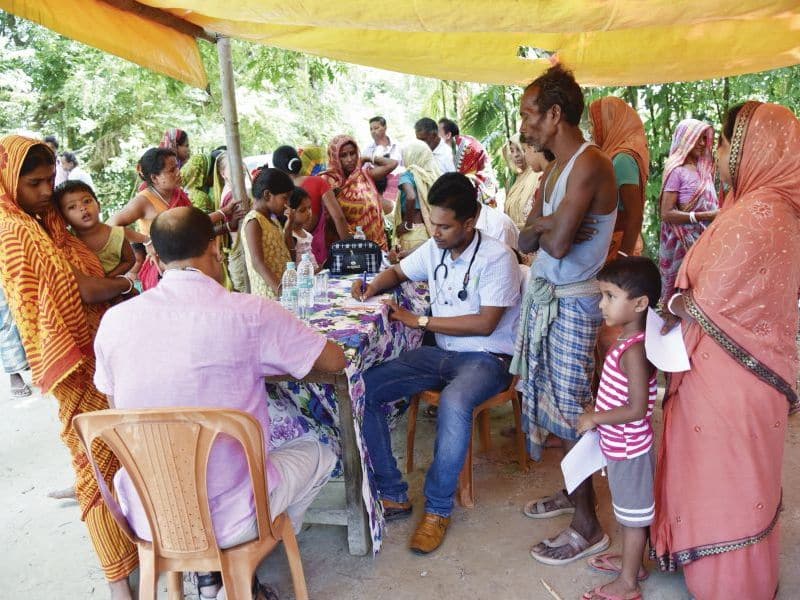
When rural health challenges are discussed, attention often centres on visible gaps like the shortage of doctors and the lack of medicines. While these are all real and concerning issues, they distract people from a quieter and even more damaging problem that lies beneath them all – poor health awareness.
This lack of awareness doesn’t just affect how people in villages respond to health challenges. It also reshapes household economics, workforce productivity, and even generational mobility. Although you cannot see the true cost of poor health awareness in villages or other backward regions in medical records, it’s quietly compounding across lives and years.
Hence, we at Manav Vikas Sanstha (MVS India), a NITI Aayog-registered and ISO 9001:2015-certified NGO in Rajasthan, decided to work closely with local communities across 60+ Indian districts to raise health awareness in rural areas. Our efforts are directed towards bringing tangible improvements right at the base level so that poor health awareness in villages doesn’t translate to delayed treatment, long-term dependency, and economic loss.
In this blog post, we highlight the hidden cost of poor health awareness in villages, which often goes unnoticed. The blog also shares how our on-ground initiatives are driving real-world improvements in village healthcare awareness among local communities.
When Illness Becomes ‘Normal’ in Village Life
In many remote villages, health issues aren’t immediately recognised as problems. People living there usually dismiss fatigue as part of daily labour and even tolerate persistent pain until it becomes unbearable. Some view regular health checkups as ‘unnecessary,’ unless a visible emergency arises.
Unfortunately, for many village residents, accessing healthcare means losing a day’s wage, travelling long distances, and paying high diagnostic charges upfront. For these reasons, many rural people prefer to delay their treatment. Over time, this becomes a habit, and preventable conditions worsen.
At Manav Vikas Sanstha (MVS India), we believe that the lack of health awareness isn’t low in villages because people don’t care about their health. It’s because acting on that awareness feels impractical and expensive to them. Hence, as a trusted NGO in Rajasthan, we’ve launched initiatives like Project AAROGYYA and Project GARIMA to ensure appropriate healthcare access for rural people. These projects don’t just raise awareness of better health in villages but also provide affordable healthcare to residents, addressing the root cause of the problem.
A Chain Reaction of Loss Created by Poor Health Awareness
Many people underestimate the real cost of poor health awareness because it’s layered and rarely visible at the surface. Let us bring the hidden costs to the forefront so you can better understand the collective damage they cause to village communities.
Suppose a working adult falls sick due to a delayed diagnosis. This directly means the household loses income. When illnesses become chronic, medical expenses rise, and savings disappear. Many families end up being forced to either borrow money at high interest rates or sell away assets to manage expensive healthcare bills. All of this further pushes into financial vulnerability.
Children are also deeply affected when parents become sick. Their schooling becomes irregular, and in many cases, children are pulled out of school temporarily to support household responsibilities. The problem is even bigger for adolescent girls as health-related challenges linked to menstrual hygiene result in absenteeism, and eventually dropping out altogether.
These outcomes are not sudden failures. They’re the result of long periods where health risks go undetected and unaddressed, slowly eroding stability and opportunity.
Manav Vikas Sanstha (MVS India) Spreading Health Awareness in Rural India
We strongly believe that health awareness is important, but awareness without access has its limits. For instance, telling village residents to monitor their blood pressure or blood sugar means nothing if diagnostic tools are unavailable nearby or are extremely expensive for people to access.
Hence, we at Manav Vikas Sanstha (MVS India), through our various initiatives running across rural regions pan-India, ensure that health awareness in villages is accompanied by solutions that are accessible, affordable, and reliable.
To fix the low health awareness challenge in rural areas of India, we are currently working on the following two projects:
-
Project AAROGYYA – Enabling Timely Health Diagnosis for Healthier Communities
This project by Manav Vikas Sanstha (MVS India) aims to enable early health diagnosis for rural communities so as to prevent complications arising from delayed treatments. The project intends to improve accessibility and quality of primary healthcare services in rural regions through technology-enabled diagnostics and digital healthcare solutions.
As part of the project, we install Health ATM Machines in government PHCs and CHCs. Besides improving healthcare access, it also reduces healthcare costs and improves health awareness.
We are glad to share that under our Project AAROGYYA, we have, to date, successfully installed 57 Health ATM Machines in the rural districts of Punjab, Rajasthan, Gujarat, Sikkim, Mizoram, Assam, Goa, Uttar Pradesh, Tripura, and Ladakh.
The machines are capable of screening 45+ vital health parameters within 10-15 minutes, generating instant health insights. These FDA & CE-certified diagnostic kiosks have empowered rural communities by providing early risk detection and promoting preventive healthcare practices.
To know more about Project AAROGYYA, Click Here!
-
Project GARIMA – Restoring Dignity Through Safe Sanitation and Menstrual Hygiene
Menstruation-related discussions are still rare in villages because a lot of social stigma is attached to it. As a result, adolescent girls don’t receive education on menstrual hygiene management, which leads to poor practices that can have long-term health consequences.
Hence, we launched Project GARIMA to raise awareness of menstrual health, hygiene, and related issues, and to improve menstrual hygiene management (MHM) among schoolgirls.
We’ve installed sanitary pad vending machines and incinerators in rural villages like Jarela, Kasba Thana, Khopar, Deori, and Asada in Rajasthan so adolescent girls can access menstrual support with complete dignity and continue their schooling without any sanitation challenges.
We’re expanding our efforts to implement this project in rural villages across 19+ states and union territories to improve health at a larger scale.
To learn more about Project GARIMA, Click Here!
Conclusion
Rural development cannot be sustained if health issues are addressed only after they become crises. Poor health awareness quietly undermines productivity, education, and financial security.
Since addressing this gap requires more than information, we at Manav Vikas Sanstha (MVS India), a renowned NGO in Rajasthan, are working closely with rural communities and public health structures and officials, including the Chief Medical Officer (CMO) of select districts, to strengthen health awareness through access-driven interventions.
If you, too, believe that lasting rural progress begins with timely health awareness and accessible preventive healthcare, we urge you to step forward and support our efforts. To connect, call us at +91 8955009377/ +91 9549127666 or write to us at hello@mvsindia.org.

All Categories
- Annual Reports (1)
- News (21)
- Projects (9)

Tags
+0123 (456) 7899
contact@example.com